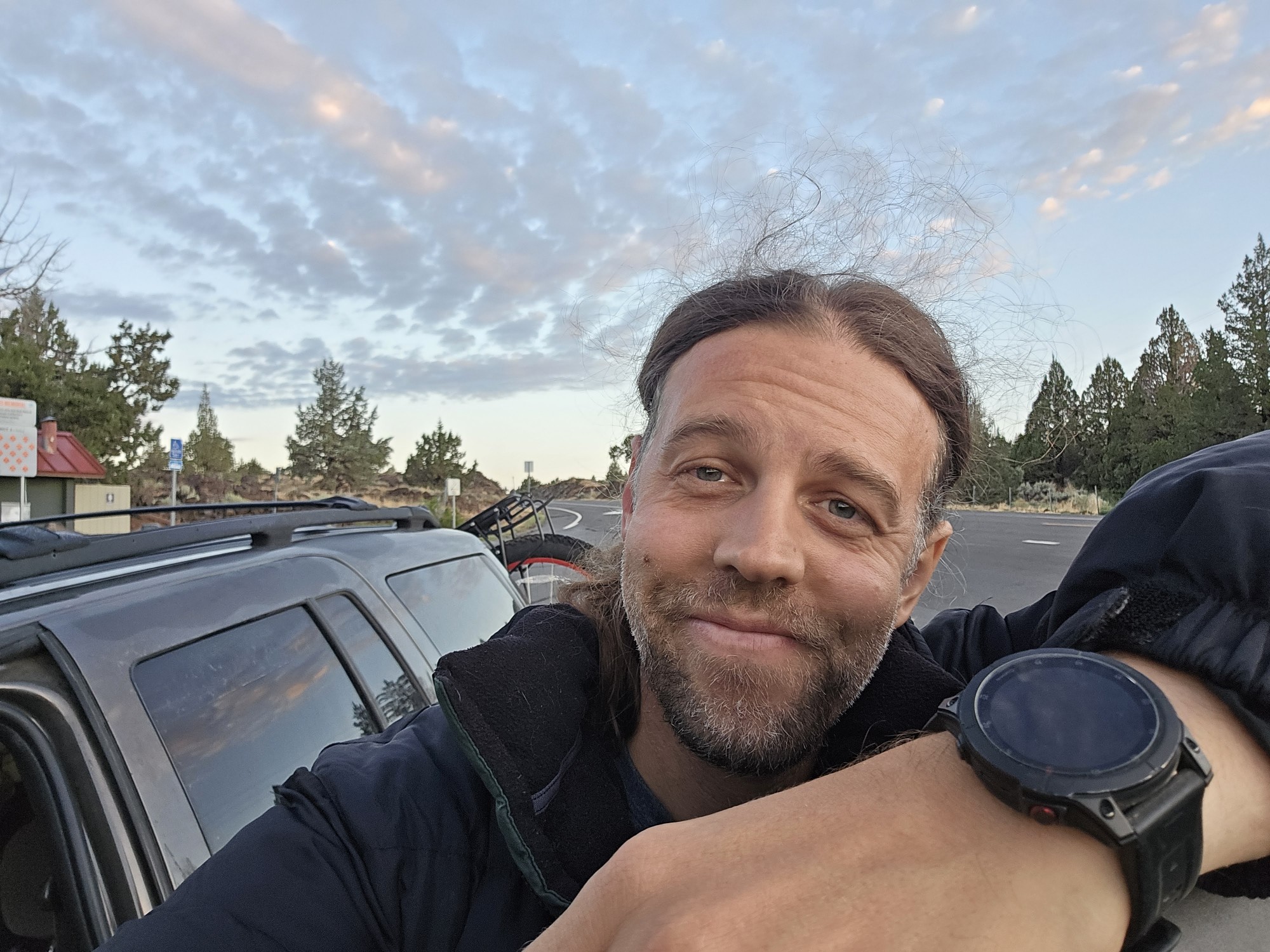
Off to Burning Man or so I thought… Part 1
As I prepare to head to Burning Man in 2026, I’ve realized that I need to share the story of my first journey there. What follows is the adventure that unfolded in August 2025, nearly a year ago. It was far too long to tell in a single piece, so I’ll be breaking it into several parts.
Well, this did not go as I had planned. But planning was not in the plan either.
About eight days before my trip in August 2025, I made the crazy decision to go to Burning Man. I remember the moment I decided. It was mid-skate at Roller Valley, about a week before I would leave. I had thought about this mysterious event for many years but had never seriously planned to go, for a few reasons. Still, I had a deep curiosity within me that I could never extinguish.
Due to trauma from my marriage long ago, anything related to barter fairs had become terrifying to me. My former wife, her mother, and her stepfather were part of a world that had left me carrying fear for years. At one point, her mother and stepfather said they planned to hire hitmen through their connections in that community to kill me. I lived under the weight of those threats for seven years. Eventually, staying trapped in that fear began to feel unbearable, but the danger had never felt imaginary to me. These were not simply uncomfortable memories from a violent marriage. They had shaped where I felt safe, who I trusted, and whether I believed I could enter certain communities without putting myself at risk.
During that marriage, I also learned things I never wanted to know about the deep, dark underbelly of the barter and hippie community. The most disturbing parts involved child abuse and sexual exploitation, including accounts my former wife described to me about what happened in those spaces in the shadows. I was forced to confront the possibility that people who presented themselves as peaceful, alternative, and community-minded could also participate in or enable horrific abuse. Worse, these communities could close ranks around the people responsible, protecting their reputation and preserving the illusion of peace while children and other vulnerable people were harmed.
That knowledge, combined with the threats against my life, was the reason I stayed far away from these events for so long. I was not merely avoiding a scene that reminded me of my past. I was terrified of entering a world where I believed dangerous people might recognize me, retaliate against me, or hide behind a culture that valued loyalty over accountability. For seven years, I allowed that fear to determine where I could go and what parts of my life I was willing to reclaim.
Burning Man, however, was far from the Pacific Northwest, far from that entire world. It felt distant enough that the chance of running into anyone from that dark past seemed insignificant. And with my former wife’s father, the one who had once promised to protect me from those people, passing away the previous year, my sense of safety had shifted. His absence made the fear feel both closer and further away at the same time. I kept oscillating between the old terror and the belief that maybe, just maybe, this space could be safe.
I felt I could finally break through that fear by going. I have always believed in leaning into fear and discomfort as much as possible, rather than allowing them to dictate the boundaries of my life. This felt like an opportunity to put that belief into practice. It was one of the goals on my fear list, a list of things I have challenged myself to face. Living in a cage built by others is a nightmare.
So, on Saturday, August 23, 2025, I set off for this unknown event, not knowing a single soul there. I was a Boy Scout growing up, so I believed I could prepare properly. In many ways, I did. But truly, nothing can prepare you for Burning Man.
Around 8 p.m. that Saturday, I finished packing and began the long trek to the Nevada desert. I drove as long as I could, making it a couple of hours into Oregon before finally deciding to stop for the night. I found a beautiful hilltop where I could make camp and sleep, with a wide view of the surrounding landscape. The first night went well. I was finishing Jess Walter’s newest book, So Far Gone, and listening to music to help soothe the drive.
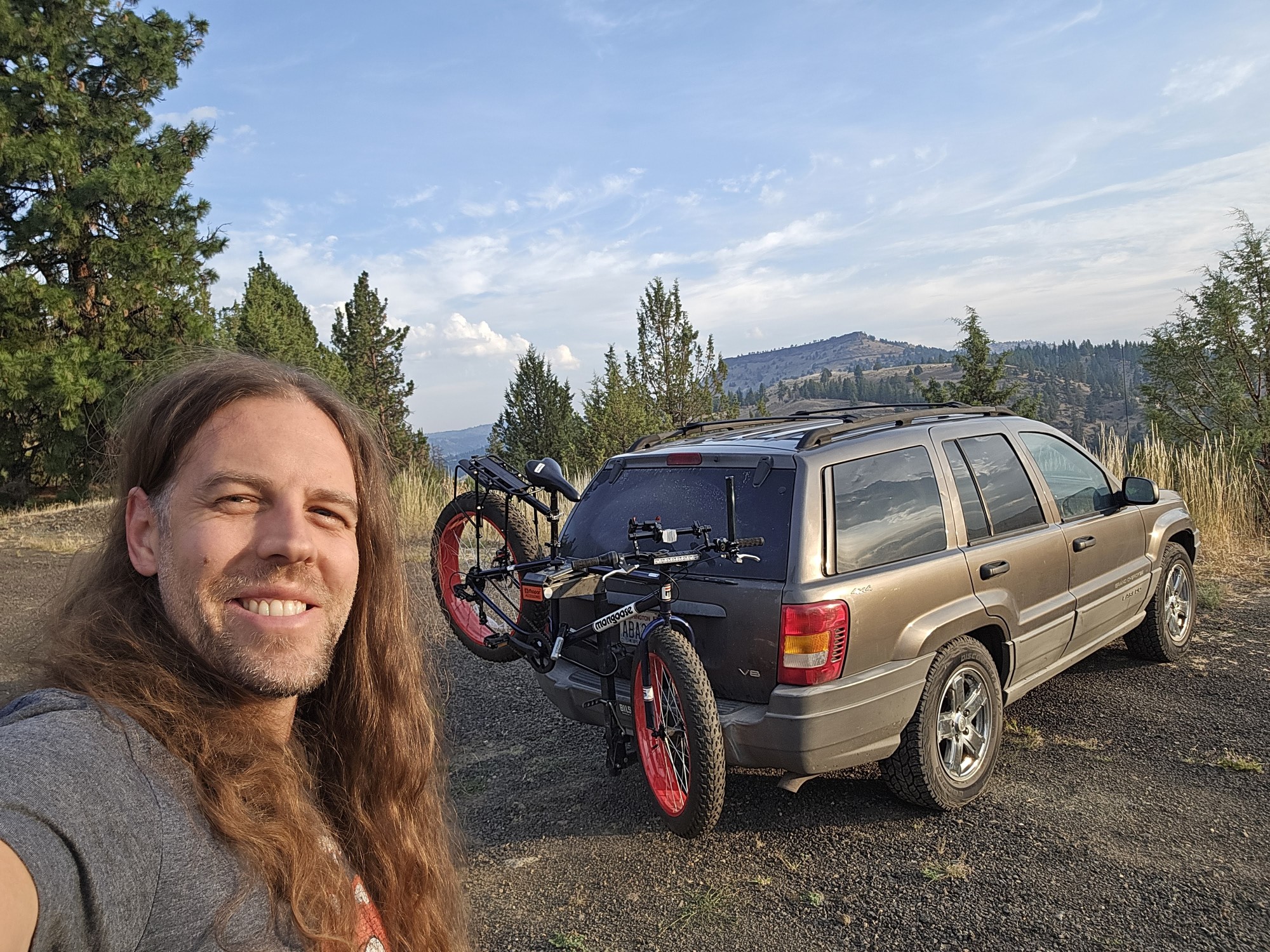
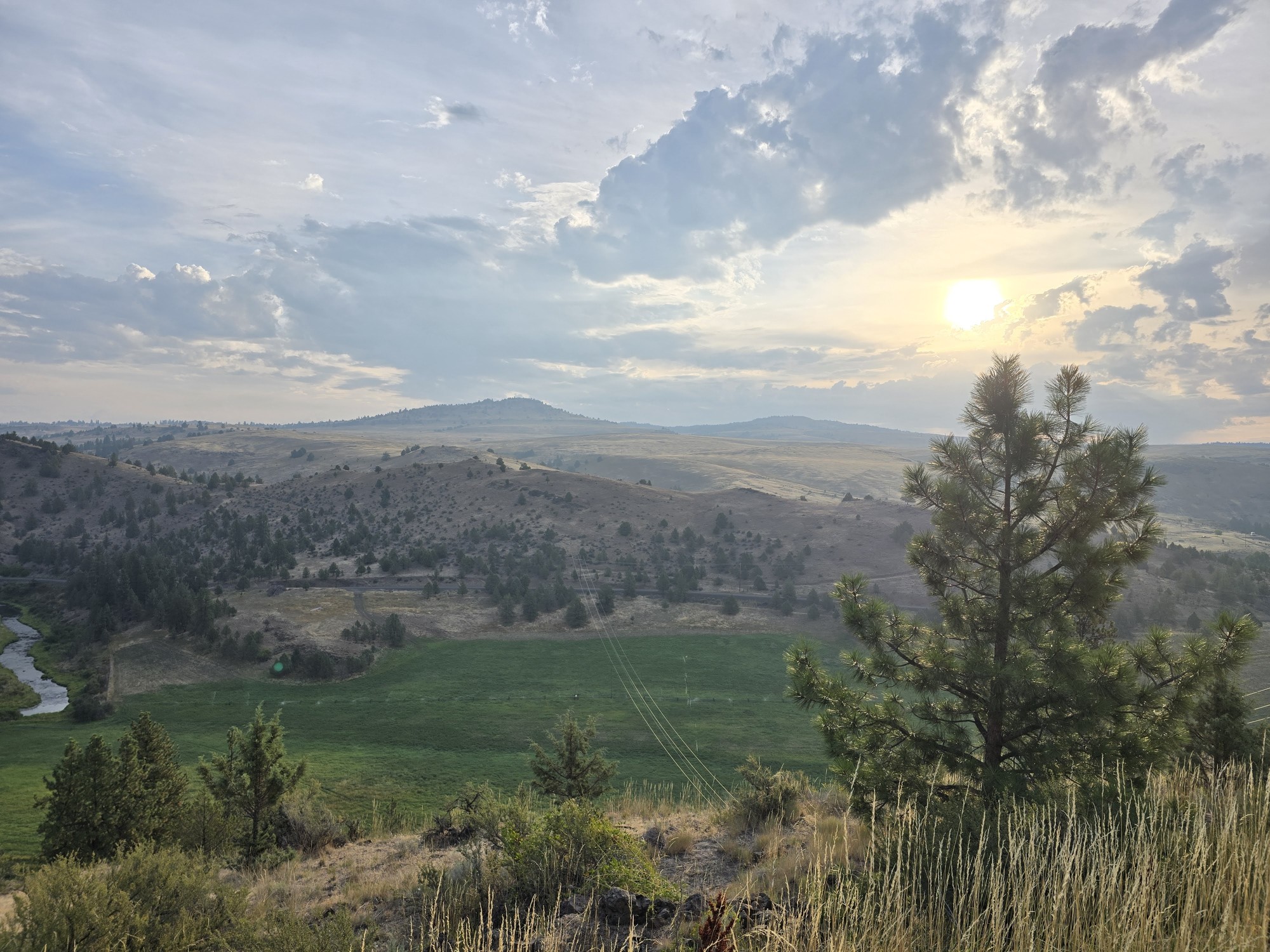
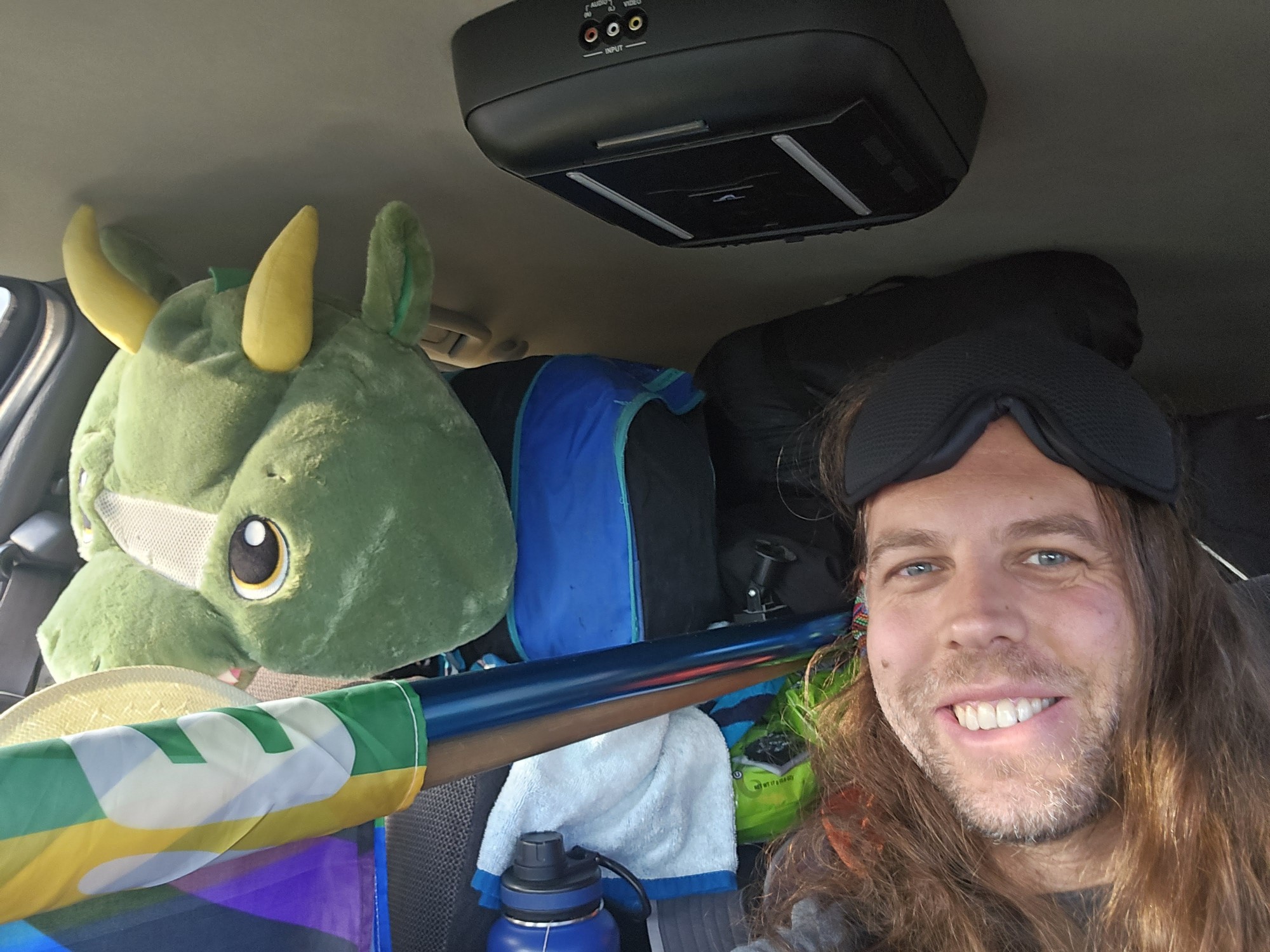
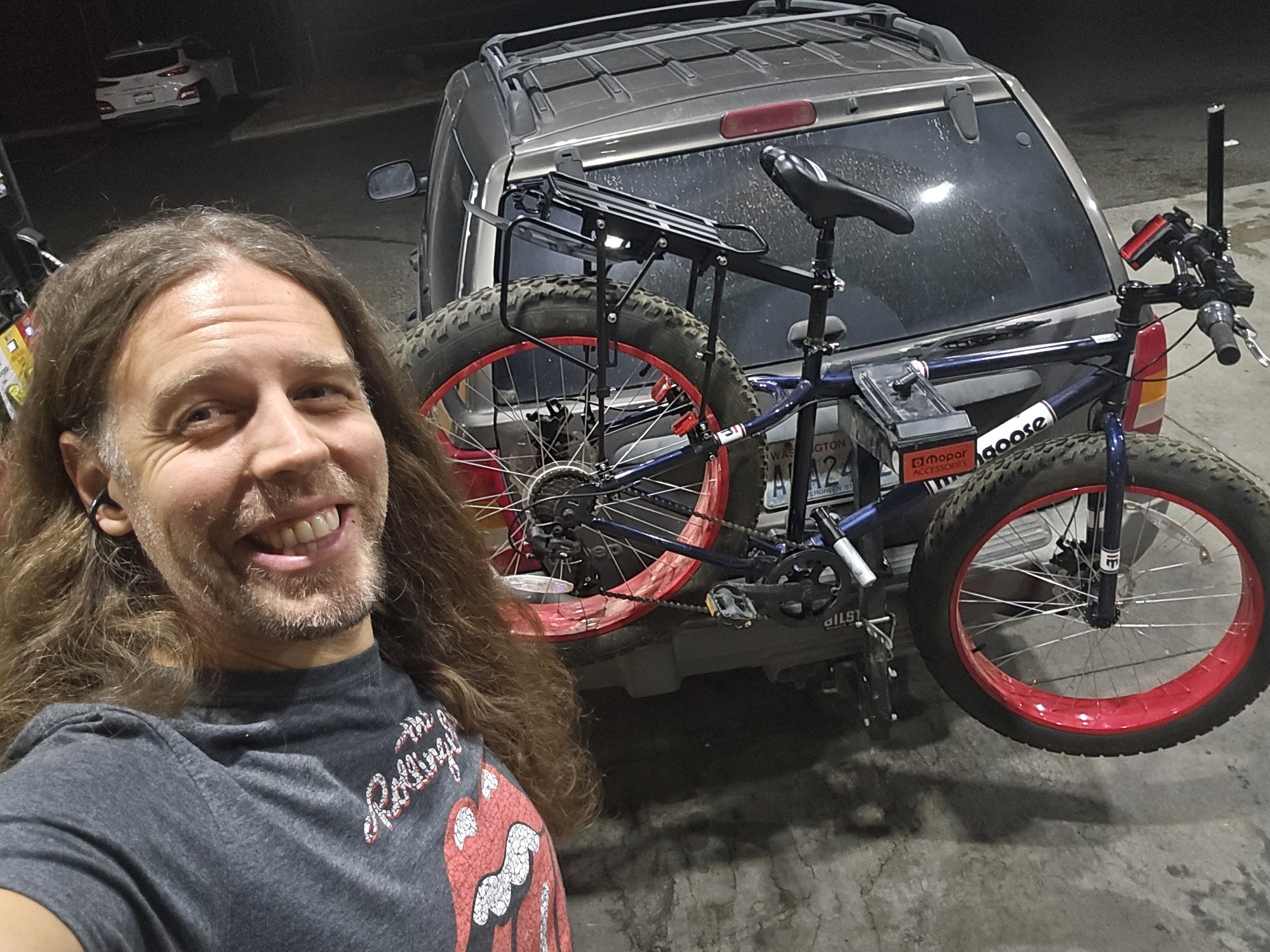
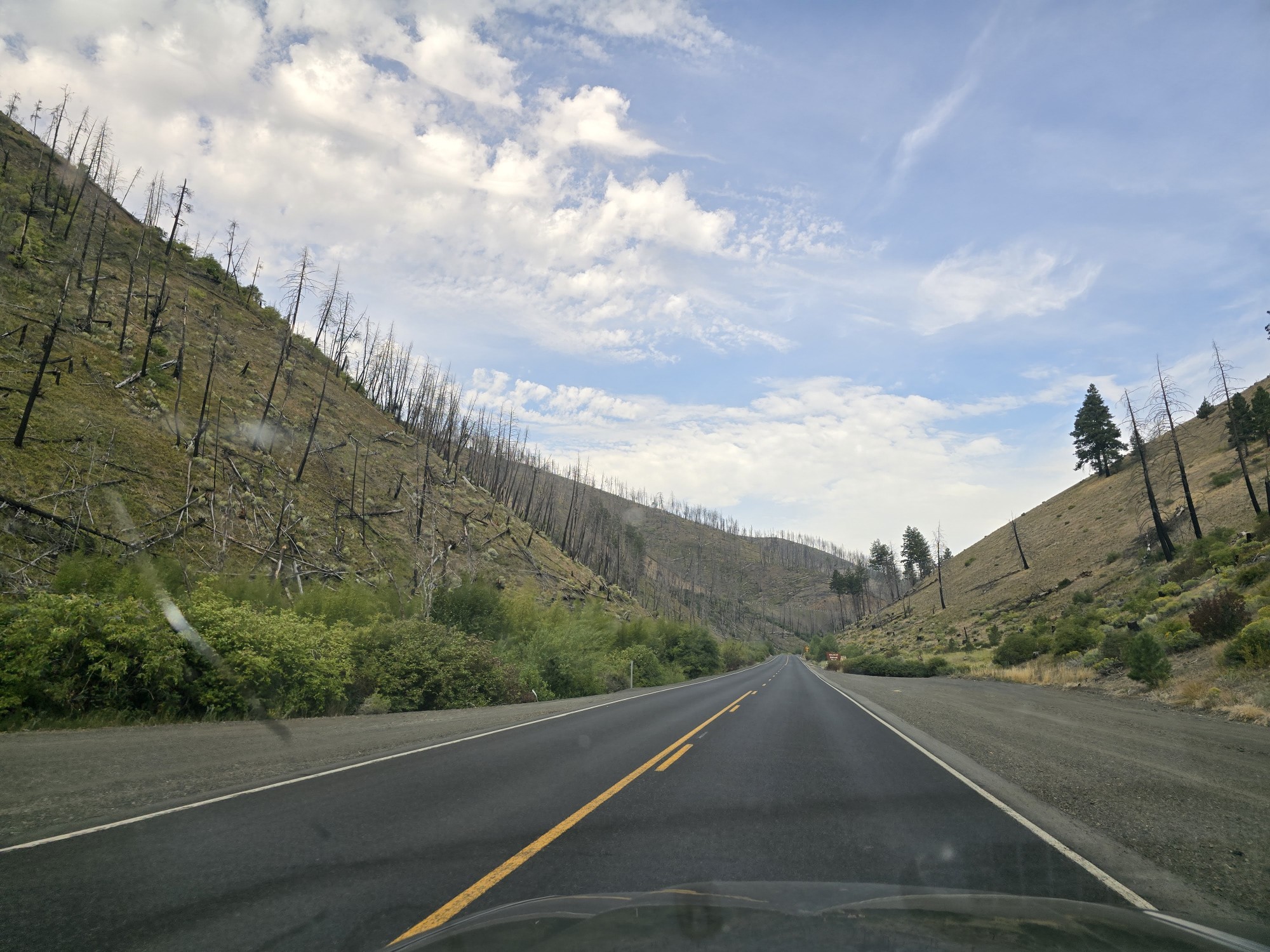
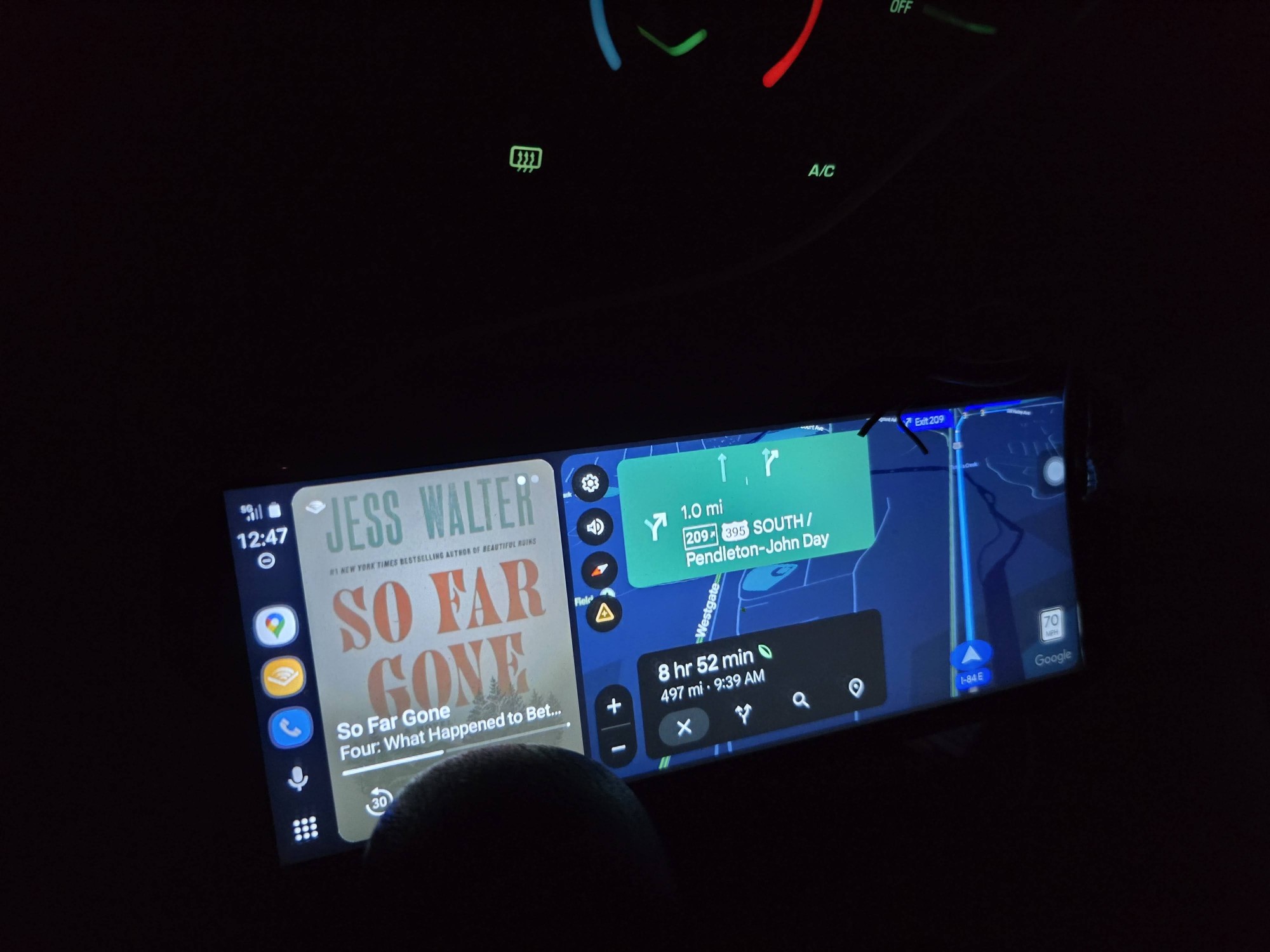
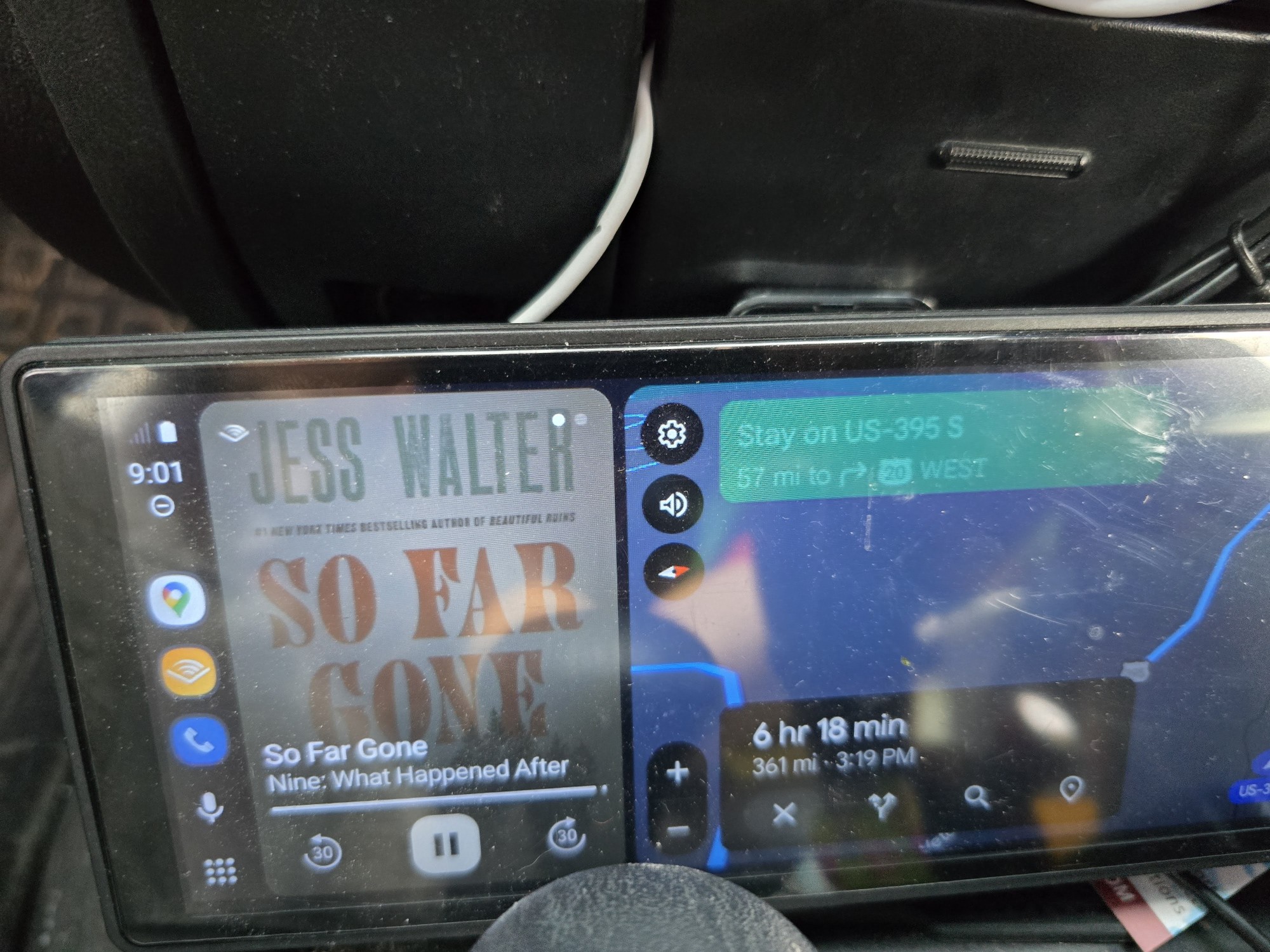
The next morning, Sunday, August 24, 2025, I woke up excited and ready to continue the drive, unaware that the day would take a turn I could never have anticipated. I finished Jess’s book and stopped at my favorite grocery store, Grocery Outlet, for last-minute vegan treats, including some vegan cheese spread. I was in rural Oregon, in the small town of Hines, and the stop felt like one of those ordinary travel moments that would soon become impossible to forget. I stocked up on a few things, got back on the road, and continued through the wide-open landscape. Then I started a new audiobook, Zen and the Art of Motorcycle Maintenance, a book many people had recommended over the years, especially people who knew my story.
About an hour into the second book, as I was breaking out of the mountains, disaster struck.
Something I could never have imagined.
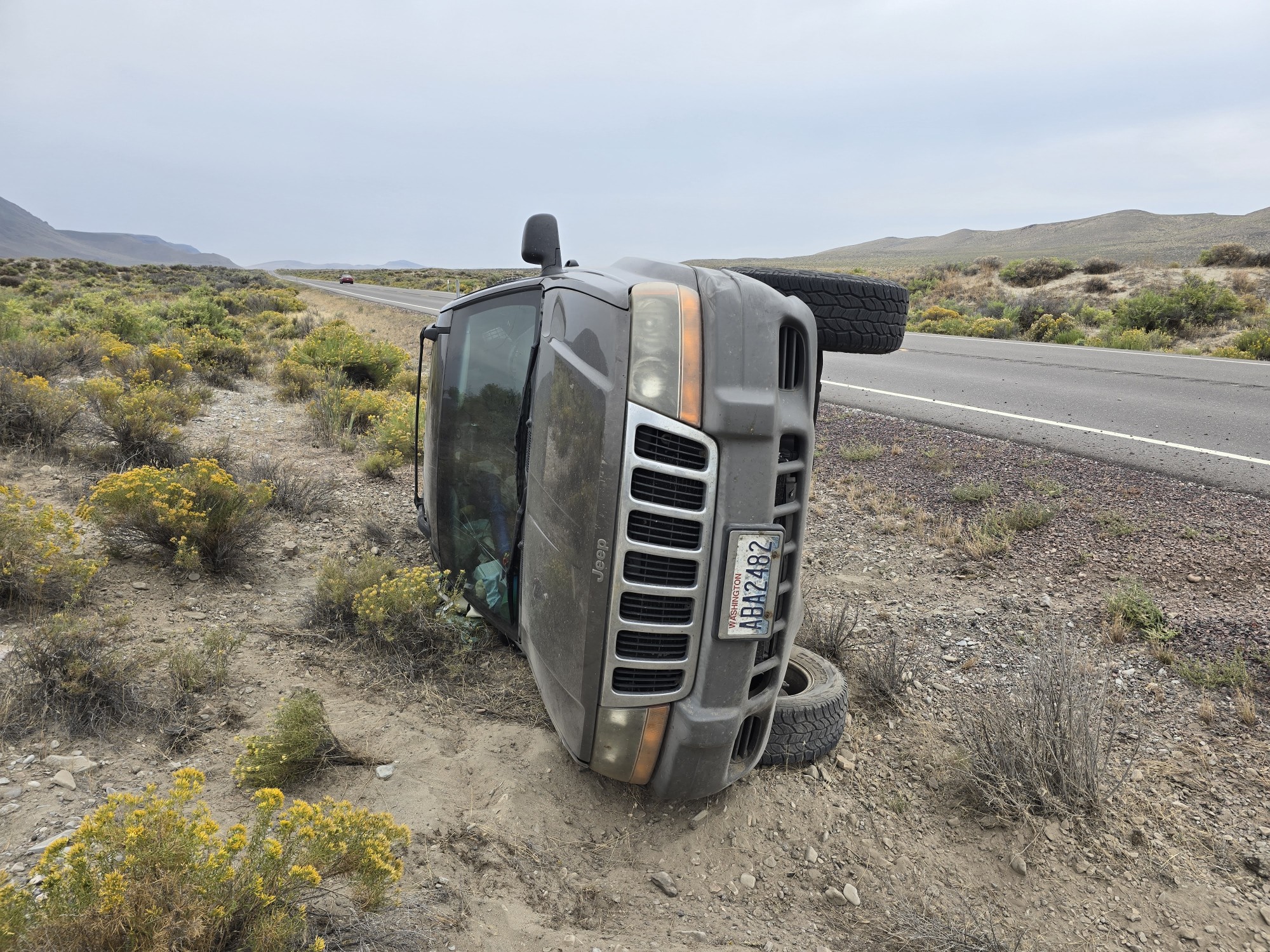
I was going 70 mph down the road. I wasn’t tired. It was 1 p.m., and my Jeep was packed nearly to the ceiling for the trip. Gear filled the cargo area and spilled into the cabin, leaving barely any open space and almost no view through the rearview mirror. Two 8-foot poles were secured through the vehicle, running through the cabin as well. Everything seemed normal until, without warning, the Jeep drifted off the pavement and into a gully at highway speeds.
What happened next is still unclear to me. I don’t remember exactly how the vehicle left the road, only that I was still traveling at full speed when the tires crossed onto the roadside. These Eastern Oregon highways had no shoulders or rumble strips like Washington roads. Within moments, all four tires were off the pavement, and the Jeep was being pulled deeper into the ravine.
I tried to regain control, but the transition from dirt back to pavement caused the tires to catch traction unevenly. At full speed, that sudden change in traction sent the vehicle into a violent spin, something I had never experienced or prepared for.
Within seconds, it flipped onto its side. I heard glass exploding and metal twisting around me as the Jeep slammed to a brutal stop.
Heart racing, breath shallow, I was hanging by my seatbelt, confused. Nothing had been wrong. It had been lightly raining, but nothing dangerous. As the vehicle rolled, my solar battery flew across the cabin, striking and shattering a window that wasn’t rolled down.
I was trapped and disoriented. The seatbelt had pinned me, and I couldn’t move. My sister had nearly died once from a jammed seatbelt after going over a ledge in her car. Now I fully understood the terror she must have felt.
Instinctively, I tried to open the door, thinking maybe I could climb out first. But from where I hung, I had no leverage. The door wouldn’t budge. Apparently, car doors are surprisingly heavy when gravity gets to hold the entire door shut and refuses to share the workload. I realized it would crash down on me if I pushed without more control.
Futile.
I studied the situation, trying to stay calm. I was suspended by the belt, my body hovering over shattered glass and gear scattered across the dirt where the window used to be. If I simply unbuckled, I would drop hard into debris, likely getting injured. I needed a different approach.
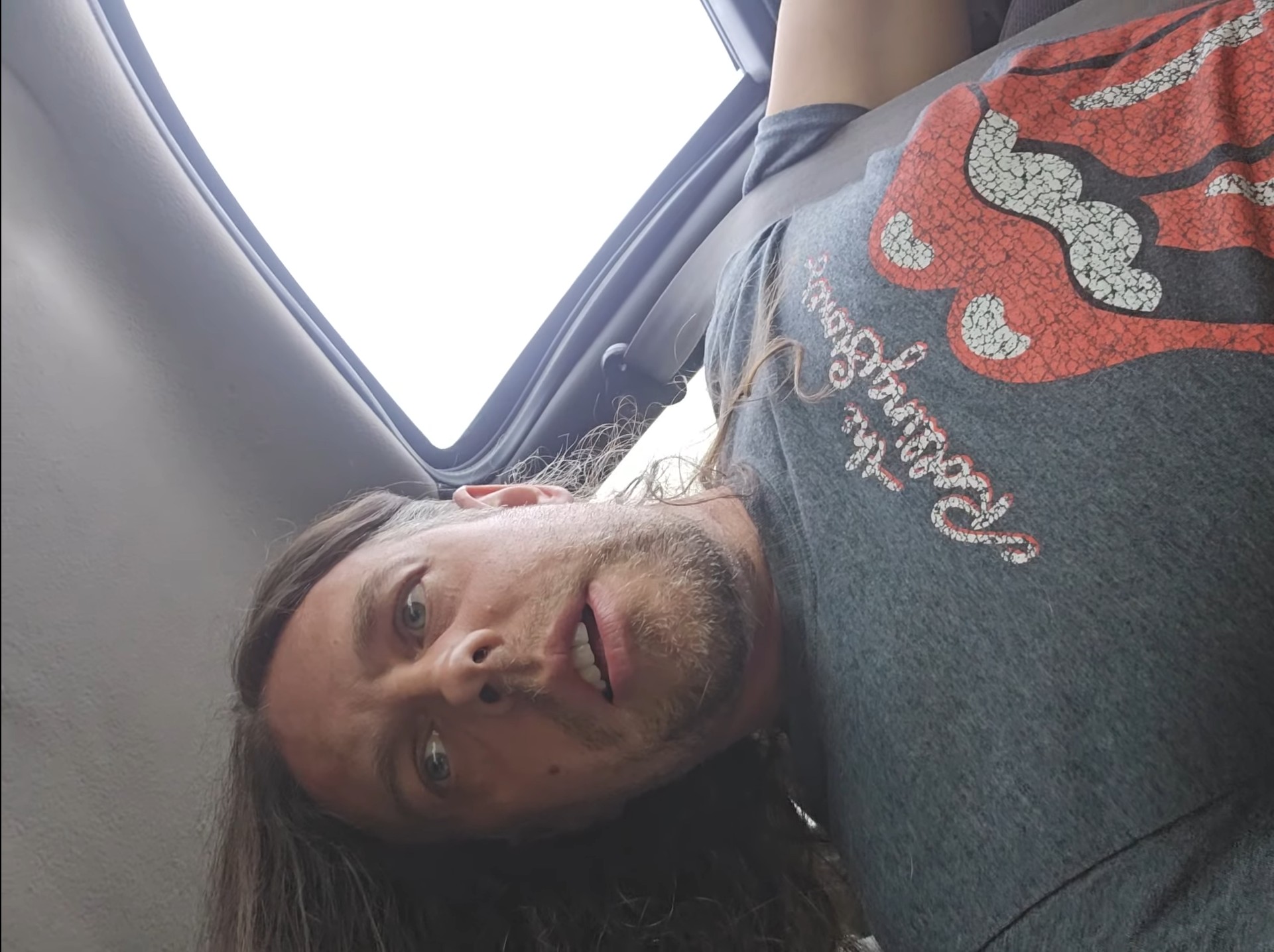
I began analyzing the mechanics. If I could change my center of gravity and land upright, I might avoid harm. Slowly, I pulled my knees to my chest, trying to get over the center console of the Jeep, the high, rigid section between the seats where the shifter and cupholders sat, toward a straight path. I tested how much motion I could get.
Bit by bit, I practiced swinging upward to get my feet aligned beneath me. After a couple of dry runs, I coordinated the motion.
One strong swing with a precise click of the seatbelt release, freeing me from the confinement.
And it worked.
I landed firmly on my feet.
I was standing inside my sideways vehicle, in a position I never imagined I would be in. My years of yoga and dance seemed to pay off in that moment, giving me the agility and control I needed. It was one of the most vivid moments of my life, equal parts harrowing and empowering.
I was now standing vertically inside my sideways car. It was one of those disorienting, almost dreamlike moments. I braced myself, planted my feet, and pushed into the door. Though it was heavy, I now had the freedom to put my full weight into it.
My muscles tensed, pushing steadily. I was still nervous, worried that if I slipped or lost my grip, the door might crash back down on me. But I committed.
With a slow, steady motion, the door creaked upward, inch by inch. The weight was real, but this time I could manage it. Finally, with a determined shove, the door swung fully open.
I climbed out, carefully holding the door to prevent it from slamming into me. I stood momentarily on the driver’s side of my overturned Jeep, trying to steady myself as I absorbed the gravity of what had just happened.
Then I jumped down to the ground below.
As I released the door, it came crashing down with a thunderous slam.
Doors are not designed to open vertically. Haha.
I landed upright, grateful, stunned, and deeply aware of how lucky I was to be unharmed.
A man arrived, stunned to find me standing there unharmed. I shared his disbelief.
My lack of injury was the first of the miracles.
I’m not invincible, but somehow, I was protected in every way I needed to be in that moment.
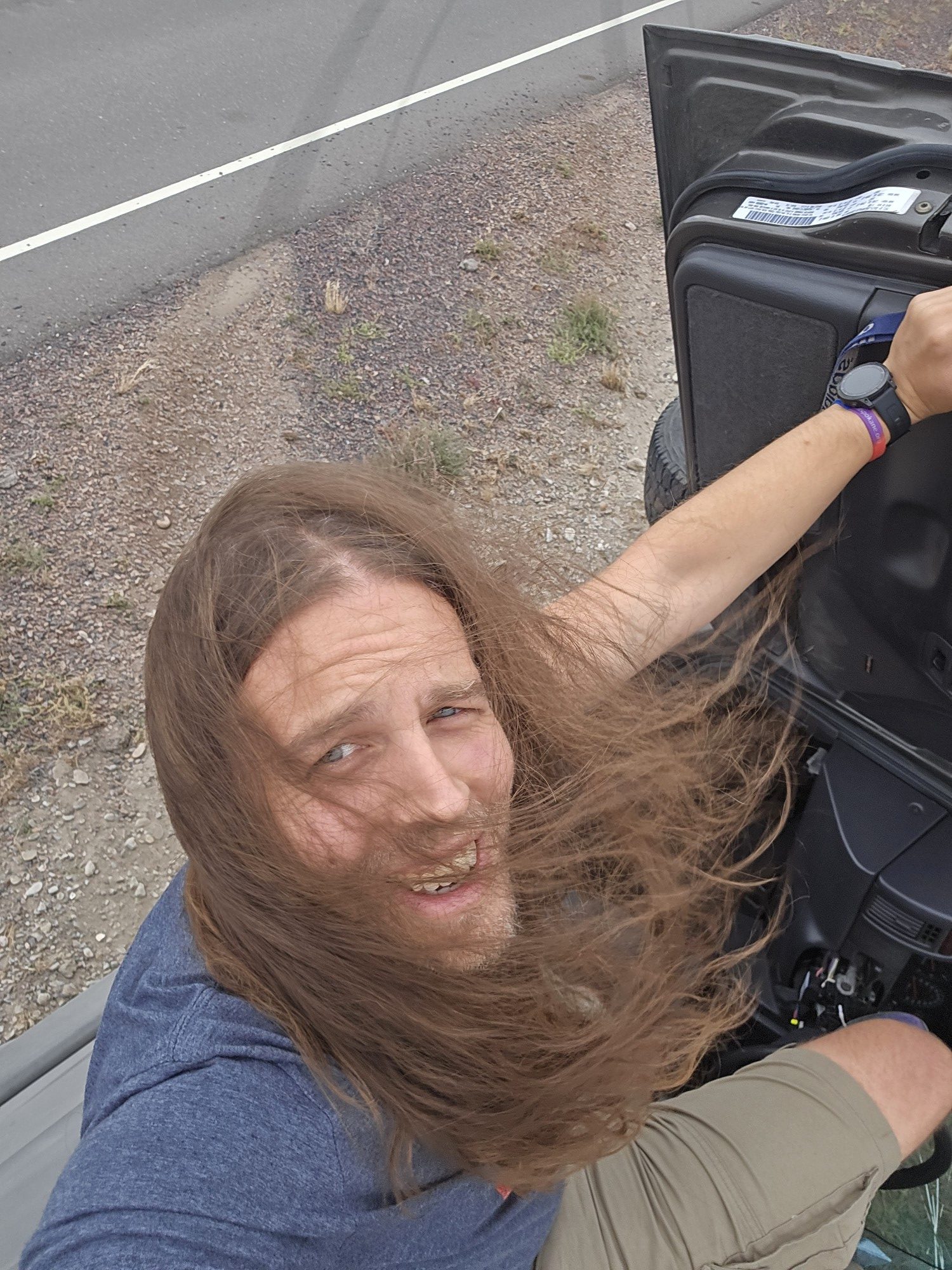
That entire sequence had unfolded so quickly. What had begun as a peaceful drive turned into a complete derailment. The emotional weight of that moment didn’t hit me fully until later.
I stood by the roadside, staring at my vehicle on its side, and I was overwhelmed. Not by pain or fear, but by the sheer realization that everything could have ended. My journey to Burning Man, meant to be about breaking free from fear, nearly became a tragedy.
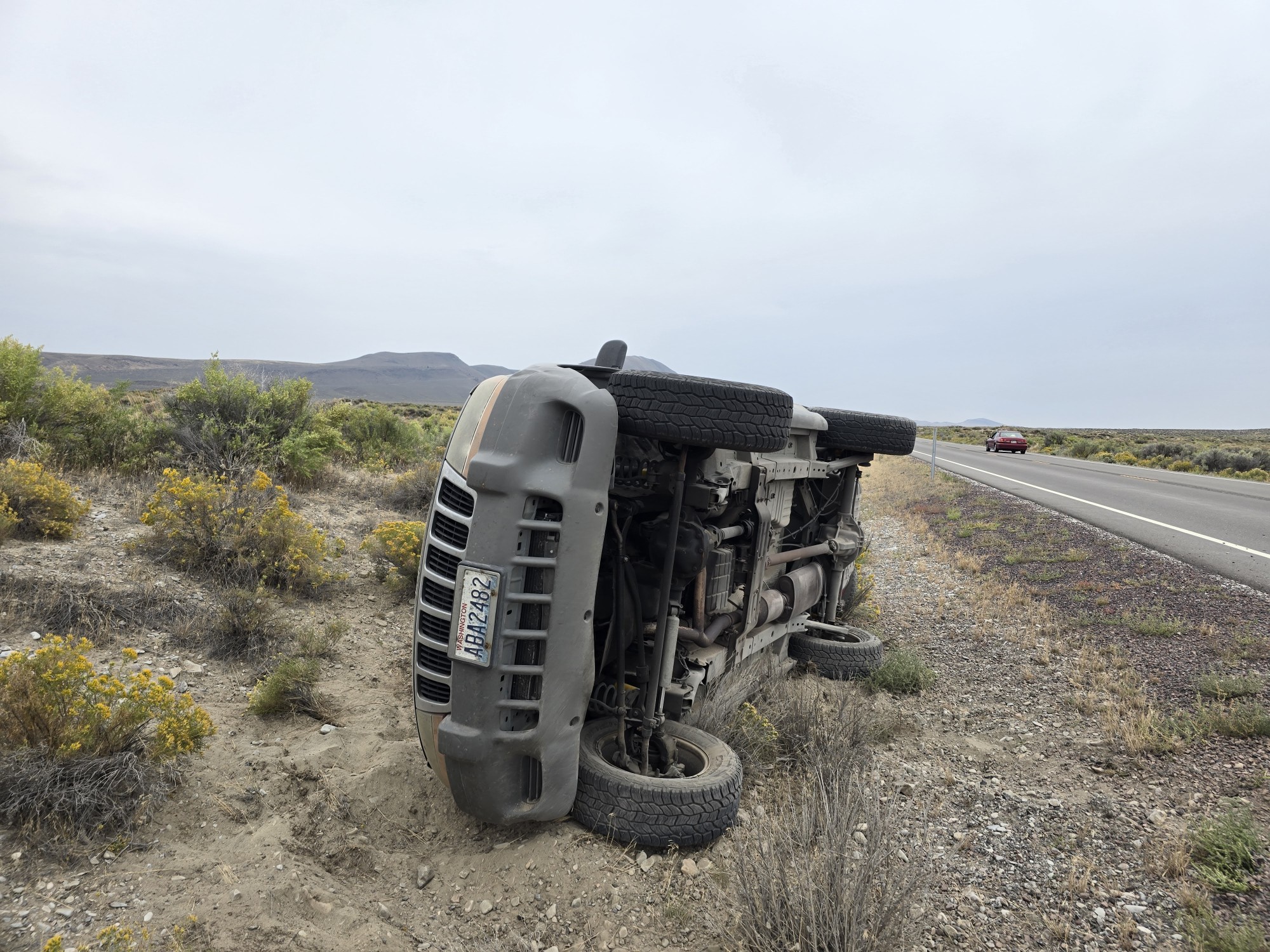
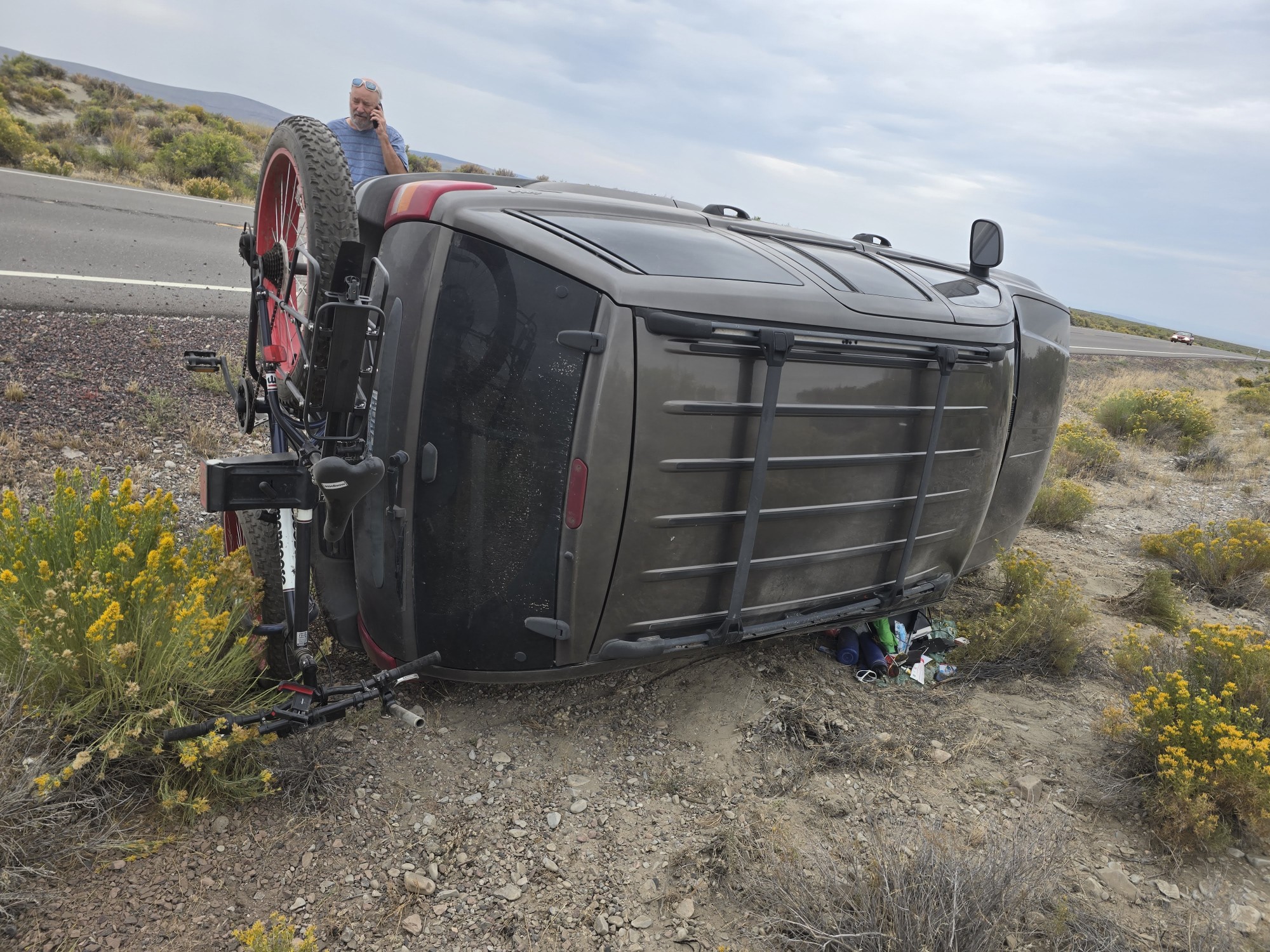
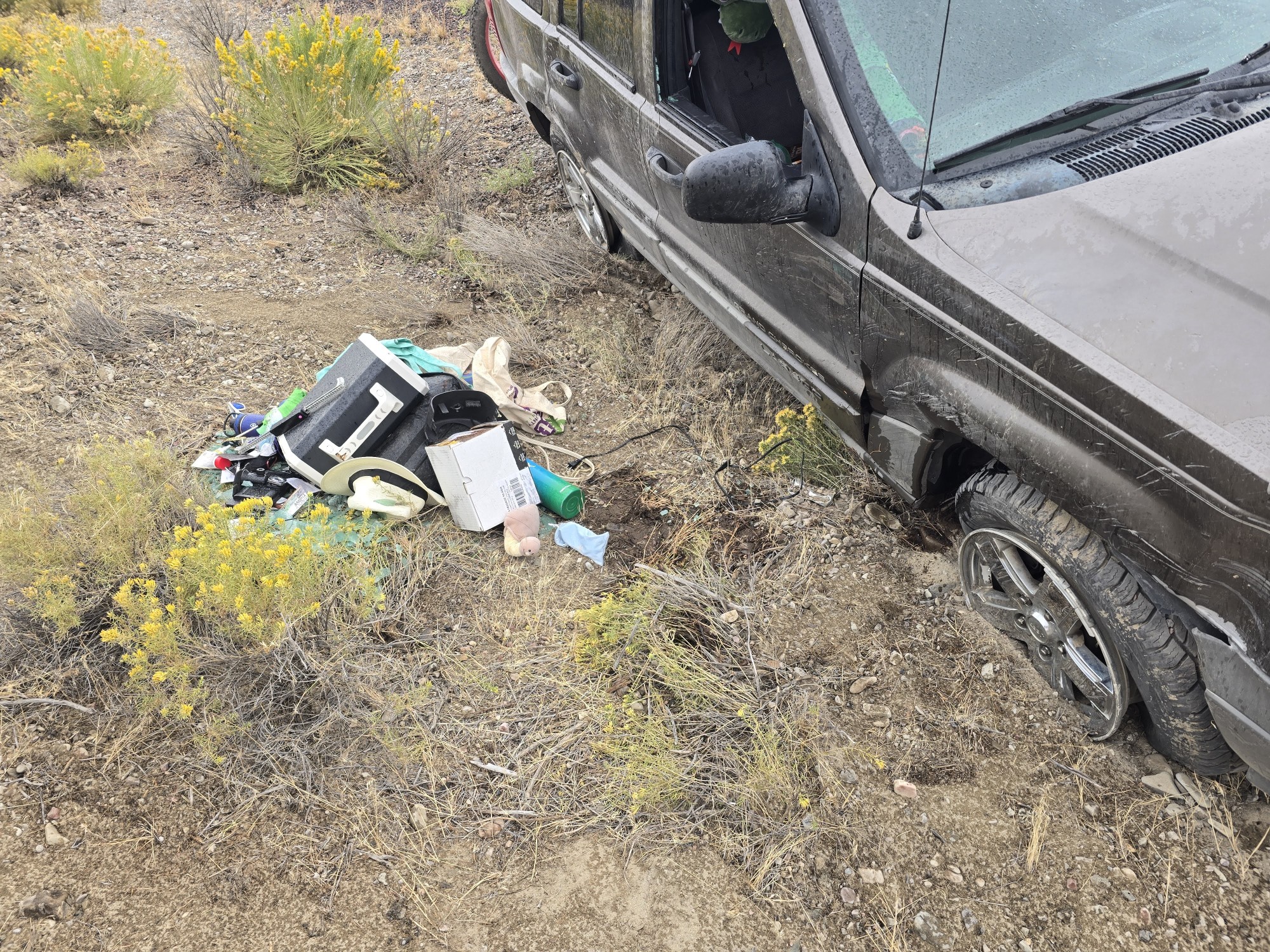
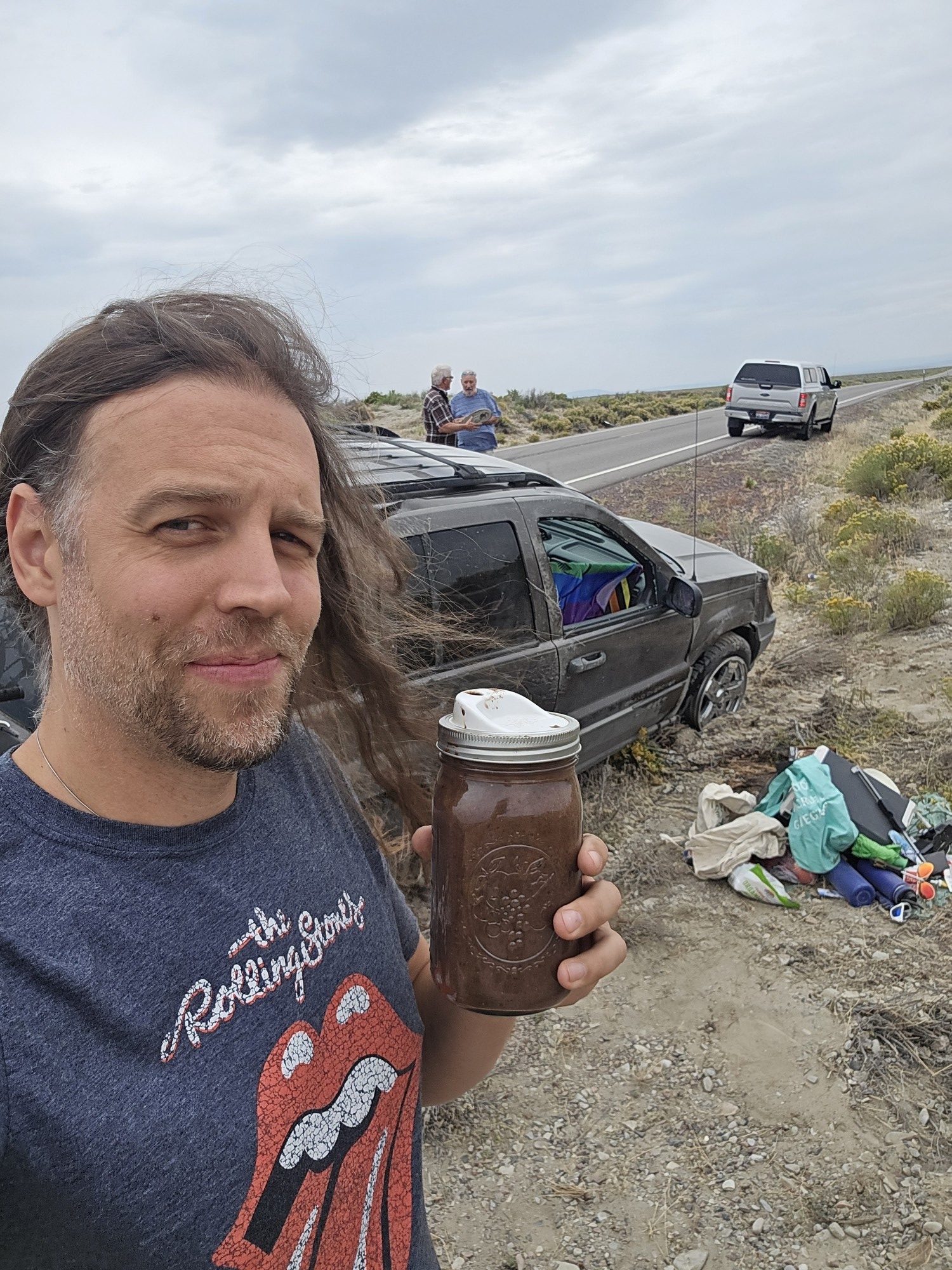
In the aftermath, adrenaline coursed through me, mingling with a rising tide of gratitude. My mind reeled with all the ways things could have gone worse. The Jeep had gone from 70 mph to zero in what felt like a strangely elegant explosion of chaos, yet somehow, that chaos wrapped itself around me protectively.
I hadn’t been harmed.
Not a scratch.
The airbags didn’t even deploy.
It defied logic, and I kept repeating the same thought.
How was this possible?
How did I walk away?
And yet, here I was.
Within five minutes, three individuals stopped, each equipped with tools and a willingness to help. I was still in shock, but their calm presence grounded me. The third person, driving a large pickup, offered a proper tow strap, exactly the kind needed for a recovery like this. We decided to temporarily block all lanes to safely right the vehicle.
As they worked, we looped one end of the strap to his tow hitch and the other around my front tire. At first, they considered wrapping it around the metal rim, but I voiced concern that doing so might destroy the wheel. Thankfully, they listened, and we chose the safer option of using the tire.
The Jeep slowly came upright as the truck pulled. As it shifted, I heard a sharp hissing sound, then another, but I couldn’t tell what they were. I assumed it was air escaping from somewhere, though I didn’t yet understand what that meant.
For a brief moment, I felt a surge of hope. The vehicle was almost upright. I had survived the crash, escaped the cabin, and now it seemed like I might be free of the wreckage within minutes of the accident.
The Jeep slammed down onto its wheels.
Only then did I understand the hissing.
The tires had been crushed and pulled apart during the rollover, and the air was escaping as the vehicle was dragged and righted. My brief sense of relief vanished. The Jeep was upright again, but it was not ready to take me anywhere.
For a moment, everything went still.
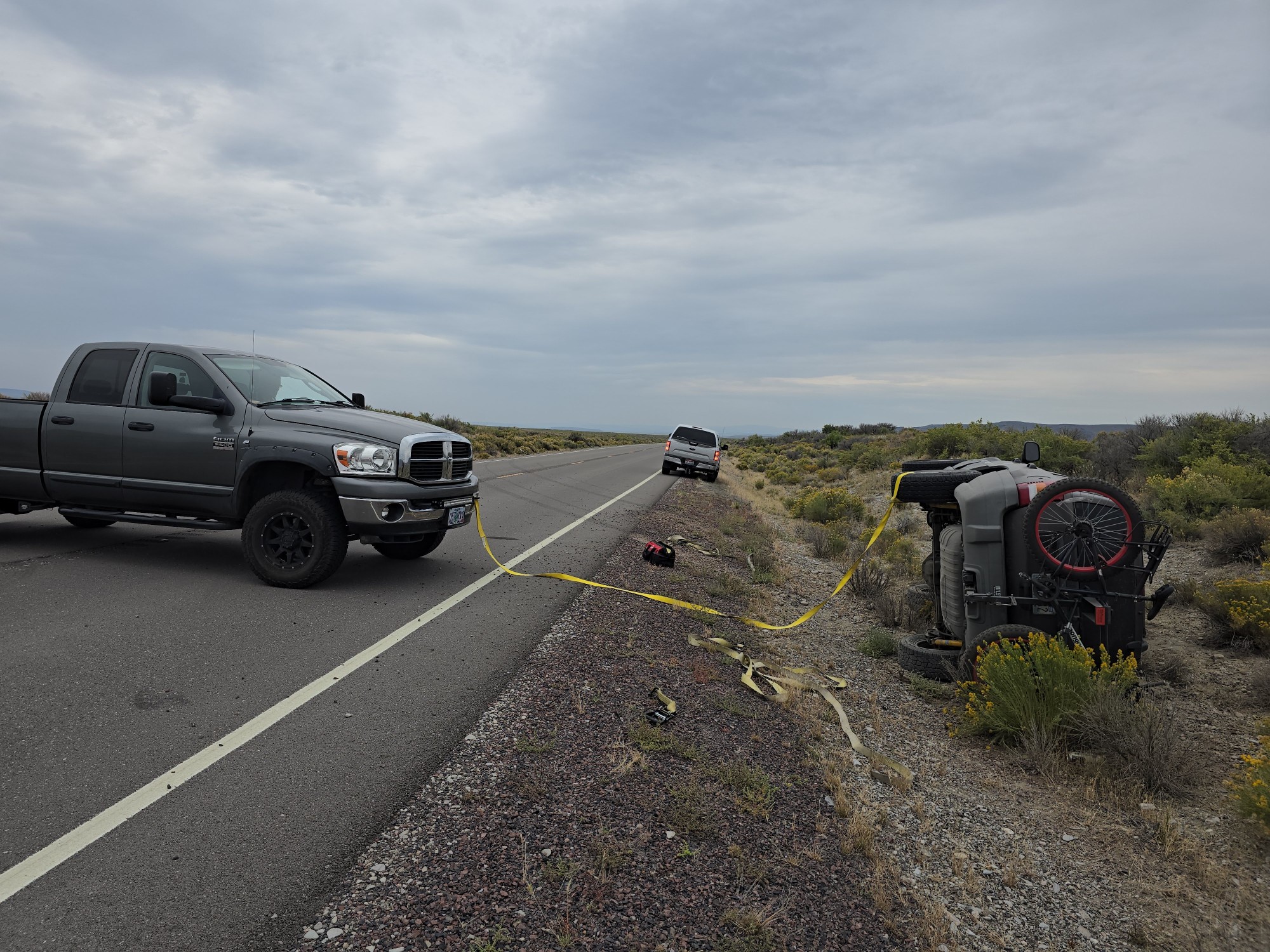
Just when I thought the worst was over, I realized I still had a long road ahead.
I surveyed the damage. Scattered across the wet ground were many of my belongings, becoming soaked by the rain that had rolled in. The chaos of it all, the tipped vehicle, the scattered gear, was disheartening.
What a mess.
What a disaster.
But again, I reminded myself.
I was alive.
I began sifting through my items and tossing what I could into the passenger seat, hoping to protect them from further exposure to the rain. My mind was still buzzing, but my body moved on instinct.
Only a handful of items had spilled from the vehicle. One of the first things I noticed was my solar battery lying on the wet ground. It had flown out through the shattered window during the crash, and I could only hope it had survived the impact. It was not only an expensive piece of equipment, but essential to my trip. I relied on it to keep my refrigerator running and to charge my phone and other devices, so if it had been destroyed, I would have lost both a major investment and a critical part of my ability to function at Burning Man.
I rushed to gather what I could, tossing items into the passenger seat to keep them from soaking in the rain. I moved quickly, driven by adrenaline and the instinct to preserve what little order I could reclaim from the wreckage.
One of the helpers had managed to call 911. I overheard him mentioning an ambulance, and I shouted over that I didn’t need one. I didn’t want to drain resources unnecessarily.
Unfortunately, the call was dropped before he could update them.
The two helpers who had first arrived soon left after I expressed my gratitude. The third, the man who had found me first, stayed.
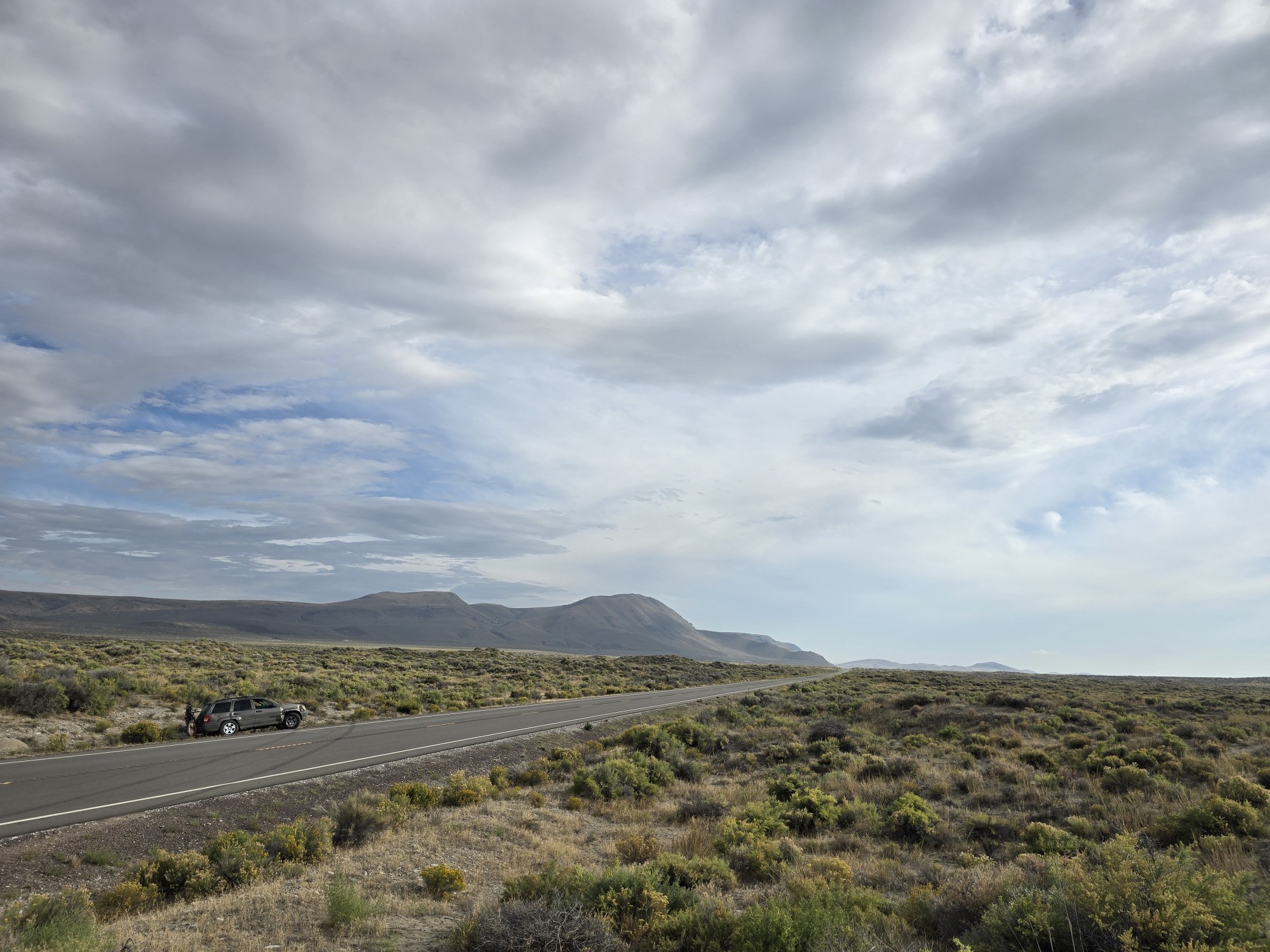
I wouldn’t fully realize it until later, but I was truly in the middle of nowhere.
67 miles from the closest town.
Although it felt as if I had only recently stopped at the grocery store, nearly two hours had passed since then. I had been driving through increasingly remote country the entire time, and I hadn’t been near a town for almost two hours.
The significance of that realization began to sink in.
I wasn’t stranded a few minutes outside civilization. I wasn’t on the edge of a populated area where help, shelter, or supplies were readily available. I was deep in the middle of nowhere, with no nearby town to walk toward, no store where I could buy dry clothes, and no realistic way to get help on my own.
For the next hour and a half, I stood in a relentless downpour, wearing only a T-shirt and shorts. I had no shelter, no clear answers, just a weak cell signal and a phone call that passed me between 911 and my insurance company.
During that time, I stood in the full downpour, trying to reach insurance company, but cell service was almost nonexistent. To get even a single bar of roaming reception, I had to climb to the highest peak of the mounds of dirt surrounding my car. I would stand there, holding my phone up and waiting, watching one bar appear, then disappear again moments later.
Before leaving for the trip, I had paid for T-Mobile’s satellite service, expecting it to help in situations exactly like this. But it clearly wasn’t working. I had no idea why at the time. I would only learn weeks later that a bug affecting S25 and S24 Ultra phones prevented the satellite service from functioning properly.
Every call became a frustrating exercise in timing and patience. I would climb the mound, wait for a signal, make a call or send a message, then lose the connection and have to start over. I was still soaked, stranded, and trying to coordinate help from the middle of nowhere.
Finally, I got through to 911. During that call, I clearly told the dispatcher that I didn’t need an ambulance and assured them I was okay. The call was then transferred to my insurance company over the 911 cell band. I spent the next hour on top of the hill, holding the phone as high in the air as possible so the connection wouldn’t drop. It seems the dispatcher was able to cancel the ambulance request, as no ambulance ever arrived.
There was so much waiting. The approval process took extra long because they had to verify whether they could authorize a tow so far from a city. The representative repeatedly had to check with their manager, returning each time with another hurdle. Because two tires on the same side had been punctured, a normal tow truck would not work. The Jeep needed to be loaded onto a flatbed, which made the process even more complicated and delayed.
When the insurance company finally approved the tow, I was told the truck would take another two to three hours to arrive.
And with no way to reach the tow company directly, I simply had to wait.
Roughly an hour and a half after the accident, a police officer arrived. I was still on the phone with the insurance representative, hesitant to hang up, but I couldn’t move a step or I would lose the fragile cell connection.
Eventually, I ended the call and spoke with both the officer and the man who had stayed with me. I did my best to explain the situation, though my memory of what had happened was still foggy.
Nothing had seemed wrong.
And then suddenly, I was sideways.
Desert Hero Appears
After a few minutes, the man who had stayed, the third of my roadside angels, returned to his life. I thanked him deeply, then prepared myself for a long, lonely wait for the tow truck.
That’s when the next miracle would begin to unfold.
About 2.5 hours after the crash, a man in a lifted Jeep Wrangler, clearly built and ready for adventure, pulled up and asked if I needed help.
I hadn’t been flagging anyone down. I didn’t want to waste anyone’s time. But a few drivers had stopped. I asked each of them if they had a way to rebead a tire, or maybe a can of butane.
They each smiled or laughed and admitted they didn’t.
I wasn’t expecting much. I had only seen big-rig truckers do that trick in YouTube shorts.
But maybe, just maybe, there was a miracle hiding in someone’s toolbox.
Then this next angel showed up.
I will call him the High Desert Hero.
He asked what had happened, and I gave him the rundown. That’s when he told me he worked with the police department, at least that’s what I thought he said, and that he had heard the call over the radio even though he was off duty.
That stunned me.
Who just shows up like that on their day off, in the middle of nowhere?
Hero said he had a shop nearby and offered to go grab some gear to try to help.
I was doubtful. The tires looked mangled from being dragged and compressed during the rollover. I couldn’t imagine anything short of a professional crew fixing it.
But I also knew that if a tow truck showed up, it would likely destroy the two flat tires by dragging them through the dirt.
So I said yes.
I figured even if the odds were slim, it was worth trying.
He told me he’d be back soon, and I half believed him.
I wandered back up a hill, trying to reach my mom and a few friends, calling, texting, anything. But each attempt failed. With no signal and no responses, I felt even more isolated.
I didn’t know what else to do while waiting, so I paced a little, breathed deeply, and took in the vast beauty surrounding me.
Mountains stretched in every direction.
If I had to be stranded, at least it was somewhere breathtaking.
Twenty minutes later, Hero returned, just like he said he would.
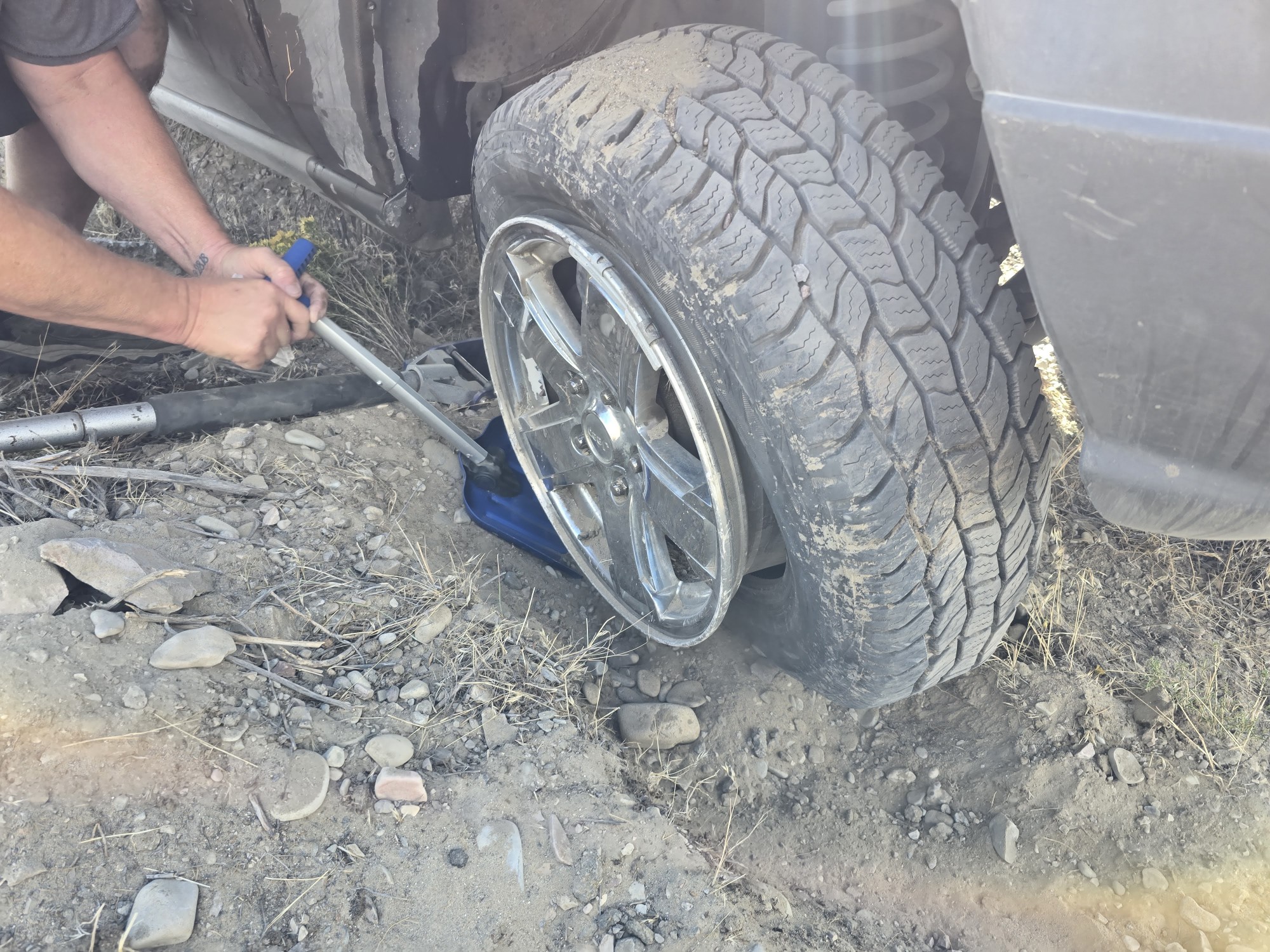
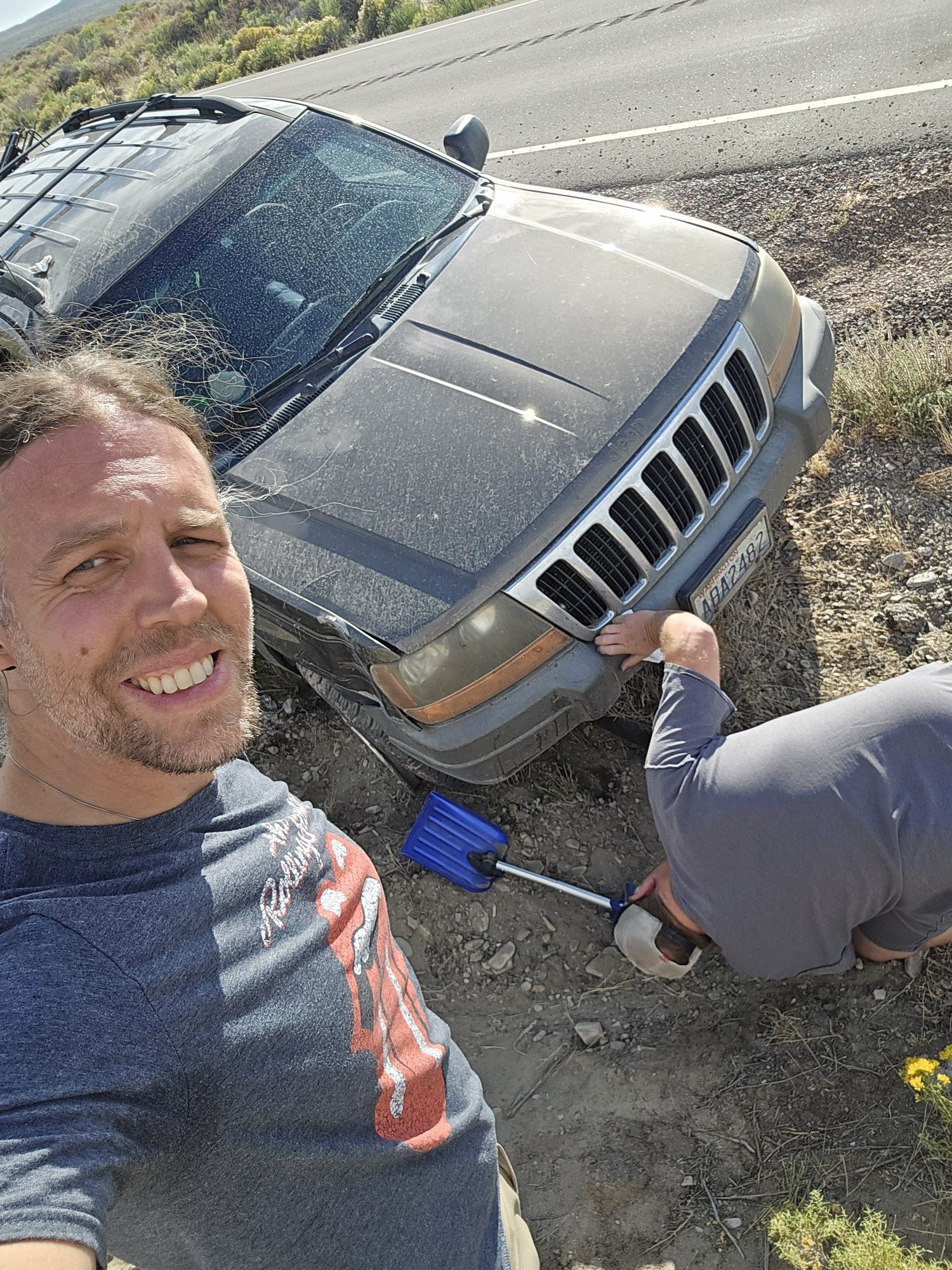
He brought four items: a massive aluminum air tank pressurized to 120 psi, a compact air compressor, a small blue snow shovel, and a racing jack.
The jack worried me most. I owned a similar one, and I knew it barely lifted my Jeep due to its height.
But that was the equipment we had.
It was our only shot.
We started with the back tire. The Jeep’s awkward angle made it tough to position the jack properly. It kept slipping, and we couldn’t get it to hold.
It was discouraging.
I believed it was unlikely we would be able to fix them, given how mangled the tires were.
But Hero had the kind of relentless optimism I usually carry. We decided to shift our focus to the front tire and try again.
Somehow, it worked.
We found the right spot, and within 15 minutes we had a solid routine. We lifted the front of the Jeep and used the shovel to dig out the debris and mud around the wheel. Then he sprayed some lubricating oil around the rim to help it seal.
We attached the air tank to the valve stem and waited.
POP.
The tire seated itself back onto the rim with a snap.
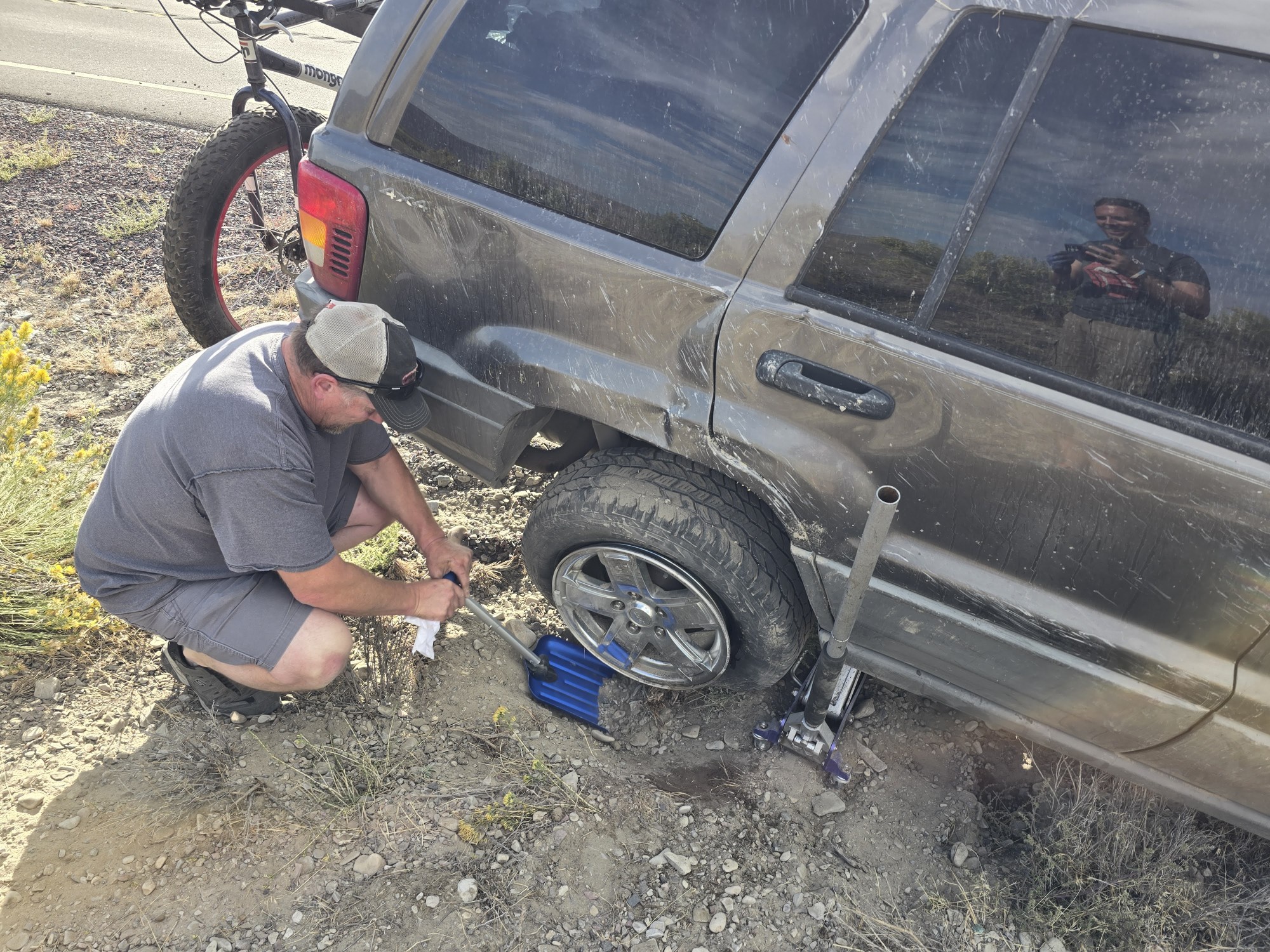
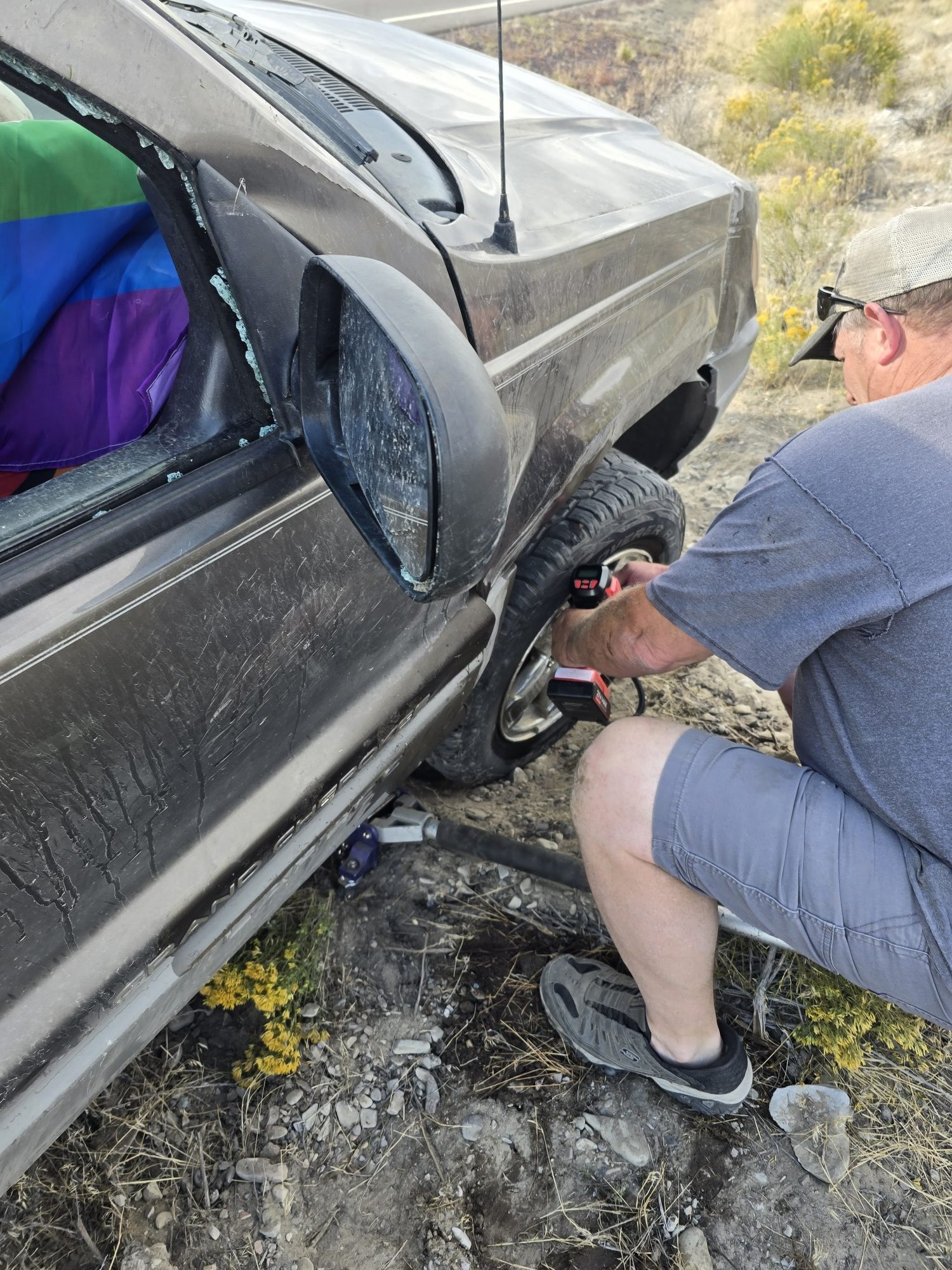
I could hardly believe it.
My heart raced.
I might not be stranded after all.
I might still make it to Burning Man.
We repeated the process with the rear tire. Now that the front one was properly supporting the Jeep, it went smoother.
Another 15 minutes later, all four tires were fully pressurized to 37 pounds.
I stood there, speechless.
Just hours before, I had been trapped inside a flipped vehicle.
Now I was standing on solid ground, beside a fully upright Jeep with functioning tires.
Another miracle.
What next?
We tried turning on the car and driving out of the gully, but it didn’t work. The Jeep wasn’t responding normally. During the rollover, it had been leaking ATF and oil, so I suspected the transmission was too low and slipping.
We weren’t on flat ground, so getting a clear dipstick reading was tough, but it seemed we were down a few quarts. It was acting odd for such a minor drop, but the man said he had some ATF in his garage and headed off again.
Hero made another 20-minute round trip.
While he was gone, I returned to the hill and wandered, hoping to get reception. Despite the tires now holding air, it didn’t seem like the Jeep would move under its own power.
When he returned, I ran over to meet him, and we poured in one quart of ATF.
Oddly, the dipstick then read overfull.
What?
The car hadn’t moved.
We were puzzled, but I decided to try once more, this time in 4WD.
And it worked.
The Jeep crawled its way out of the gully.
Then came a surprise.
He invited me to his shop.
I followed him about 4 or 5 miles until he turned into a massive compound.
The Oregon State Department of Transportation garage.
It all clicked.
I asked him what he did, and he confirmed it. He worked for the DOT, not the police.
This was his “shop” he was referring to.
Inside, I found everything I needed: tools, body panel equipment, tape, plastic, and even self-tapping screws to reattach my side mirror.
We reworked what we could to make the Jeep safe enough to drive again.
As I said goodbye to the High Desert Hero, I pulled most of the cash from my wallet and offered it to him.
He shook his head and gently refused.
“Just pass the good deed to someone else someday.”
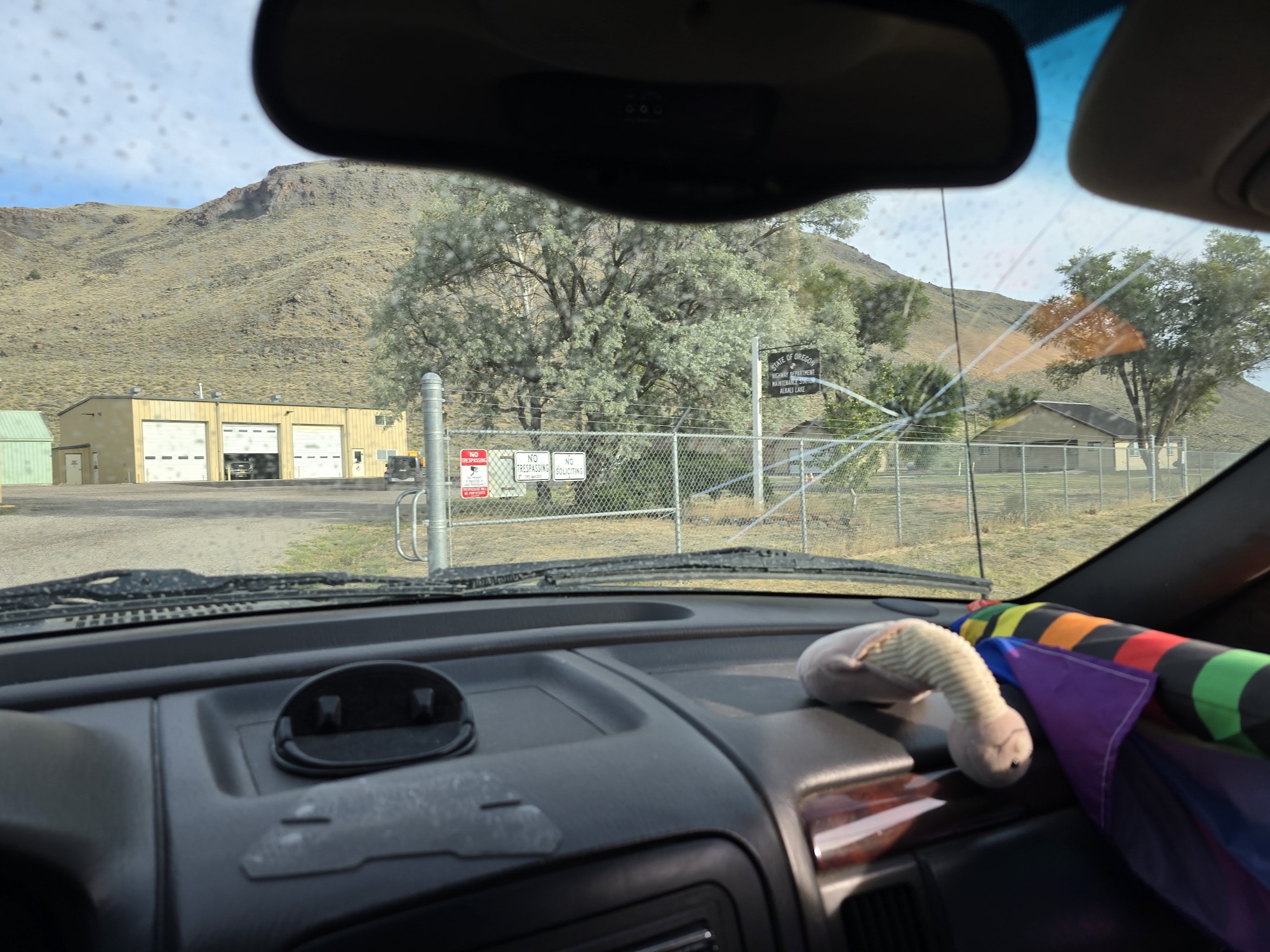
By around 5:30 p.m., I was back on the road with the vehicle in as good a condition as I could have hoped for, given what had happened.
I felt completely surreal, unsure of my next step.
I barely knew anything about Burning Man, but I did not think this car was ready from what I did know.
My idea of just taping the broken window no longer felt viable. I had heard horror stories of 50-plus-mph winds and torrential rain. I didn’t trust that the Jeep would hold up under those conditions with no window.
So I rerouted.
I would go to Reno.
It was a detour of 220 miles and a full day lost, but it felt like the safest decision.
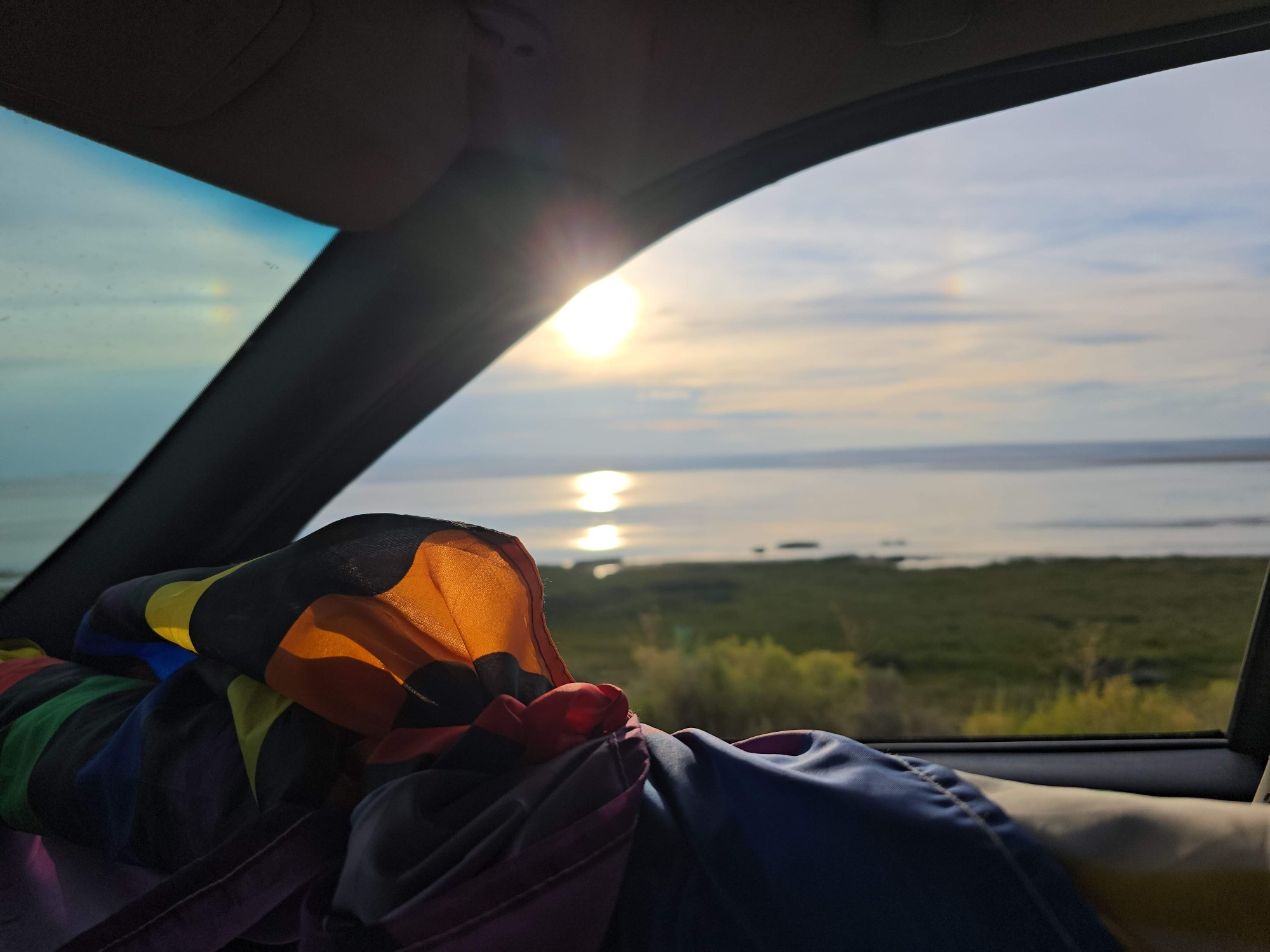
That night, exhaustion hit earlier than expected. I made it to a tiny truck stop about an hour from Reno. I ate a simple meal roadside and settled into the Jeep for sleep, with no window, no recline, and very little comfort.
It was one of the most uncomfortable nights I’ve ever endured.
But I was alive.
And that was enough.
In the morning, I would begin the next mission.
Finding a new window in Reno, a city I hadn’t visited in nearly 20 years.
I woke up with a stiff neck but was surprised I wasn’t in more pain. After brushing my teeth, I hit the road toward Reno around 8:30 a.m., arriving just before 10.
I immediately began calling around to different auto shops to find a replacement window.
The first major chain, which has multiple locations up and down the West Coast, told me they didn’t have any glass in stock for my Jeep anywhere near Reno. It would take three to four days to get one.
That was a major blow, especially since their shops dominated most of the top results on Google. I had assumed they would be my fastest bet, so I had already committed to a 20-minute drive toward their nearest location before even calling.
Next, I called a smaller glass shop that said they had the window in stock, but it would cost $260, more than double the other place’s estimate of $110.
Ouch.
That was unexpected.
I tried a few more places with no luck.
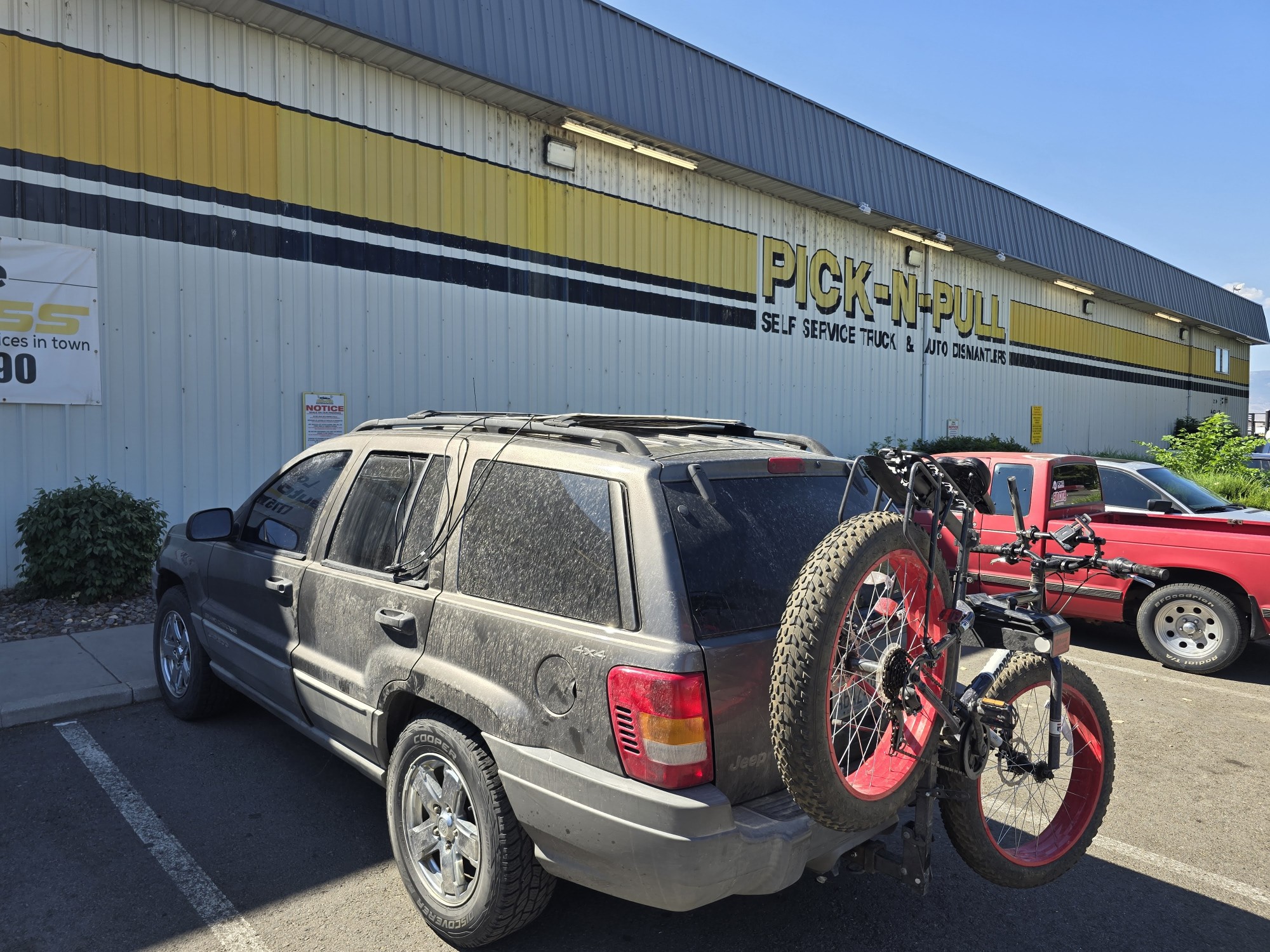
Finally, I considered the option I had been avoiding. I didn’t want to deal with the hassle of pulling a window from a wrecked vehicle. But I was out of choices, so I headed to a Pick-n-Pull-type salvage yard, like the ones I used to visit in Spokane.
They’re often picked over, but sometimes they hold unexpected treasures.
Because I expected this stop to take a while, I set up my solar array on top of the Jeep to charge while I worked.
As I wandered through the large wrecking yard I was struggling finding what I came for. Normally, I’m great at identifying car models, and I found a sea of Dakotas and older Rams, but no Jeeps.
Eventually, I returned to the front office, where they gave me a printout listing all the Jeeps from my vehicle’s vintage. The clerk hinted they were in a more hidden part of the yard.
Back out I went.
And then, the next miracle.
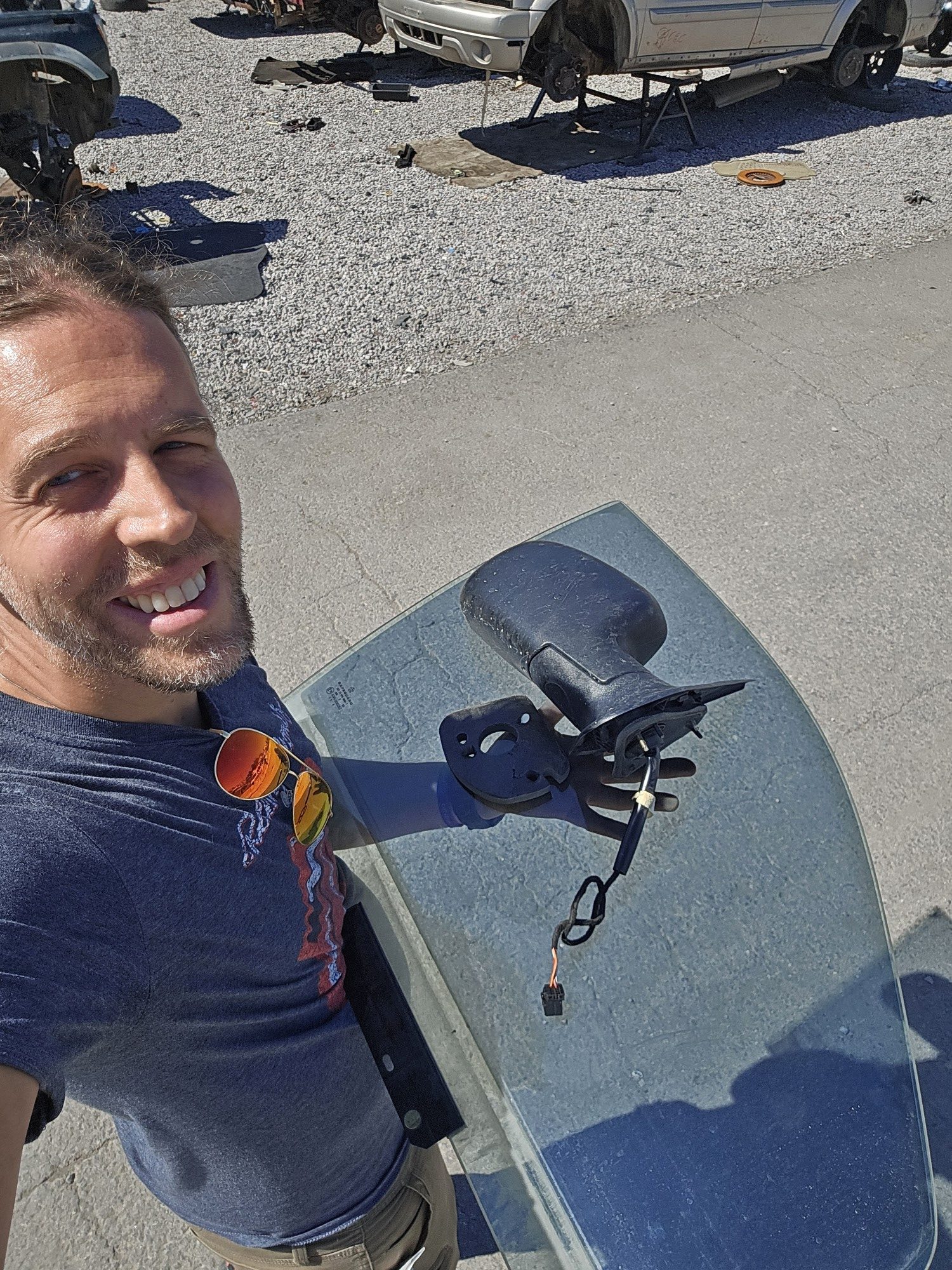
The first Jeep I found not only had the correct glass, but it had already been pulled. The door panel was off, and the window was just sitting there waiting for me.
I couldn’t believe it.
Not only was it the correct glass, but it had color-matched tint to my other front window.
I had bought tools from Harbor Freight specifically for this job, but I didn’t even need them for this step. I slipped my hands into the doorframe and carefully lifted the window out with ease.
I also noticed a perfectly intact side mirror, since mine had been damaged, and figured I should take that too, just in case the temporary screws I used didn’t hold for the rest of the 2,000-mile trip.
It felt surreal, like one of those video game moments when you walk into a shop during a post-apocalyptic quest and somehow they have exactly what you need.
That kind of easy alignment sometimes seems rare in real life.
The next part wasn’t difficult, but it was time-consuming.
I drove to a nearby body shop and asked if they could help pull the crushed doorframe back into shape so I wouldn’t be left with a two-inch gap.
Unfortunately, they said they couldn’t do it. Too much liability.
I then asked if they had a space where I could work on the car myself.
Again, no help.
But they did point me to the large warehouse next door and said I could do some shade tree work there.
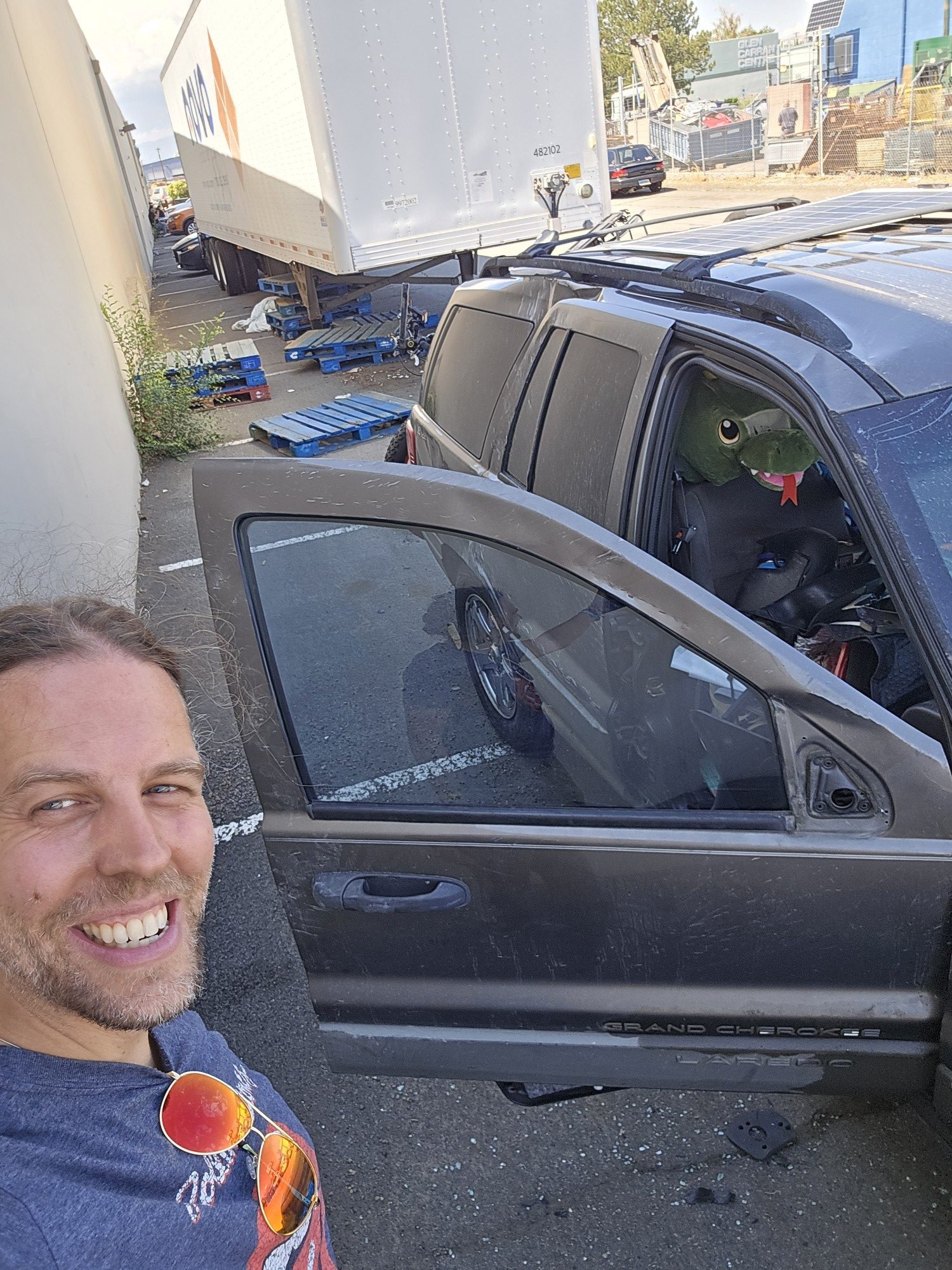
So I drove over and got to work.
I had replaced this window before, after a vehicle prowler broke it near Halloween in 2023, so removing the door panel was familiar.
But I hadn’t anticipated how deeply the frame was crushed.
The new window couldn’t rise or lower properly.
Using a few tools I brought from Spokane, including a set of vice grips, I began reshaping the mangled metal bit by bit.
After about 45 minutes of bending and adjusting, I had the window operating smoothly on its own power.
With that done, I was officially ready to head toward Burning Man.
But should I?
That question lingered hard.
All week I had been nervous.
Did this accident happen because something was trying to stop me from going?
Was it divine intervention or protection?
I felt the fear return, pulling me back into hesitation.
But at the same time, the pull toward the unknown remained.
If I turned back now, I’d never know what waited behind the metaphorical door.
Later that night, I learned Burning Man had been hit with a massive storm. Thousands of people had been turned away or stranded outside the gates.
If I hadn’t crashed, I likely would have been one of them, stuck on the side of the road in chaos.
That realization shook me.
It confirmed that if I was going, I needed to be better prepared for the extreme weather.
I felt the tent I had brought from Spokane wasn’t going to cut it. It wasn’t sealed and couldn’t handle those kinds of storms.
I stopped at a Big R store a couple of hours outside the event site and stocked up: duct tape, painter’s tape, a new tent that appeared more sealed, though I’d later learn it wasn’t, heavy-duty 18-inch tent stakes, and a giant silver tarp.
With these final tools and a renewed sense of determination, I left civilization behind and headed into the great unknown.
I realized how deeply personal this trip was.
It wasn’t about an event.
It was about reclaiming parts of myself that trauma had stolen.
It was about confronting fears, not just in theory, but in real, physical ways.
That accident was part of that confrontation.
It was terrifying, yes.
But it was also clarifying.
It reminded me that my life is still fragile, still important, still worth protecting.
This was just the beginning of the journey.
The accident didn’t stop me.
It redefined the stakes.
Burning Man was no longer just a challenge to face.
It became a celebration of survival.
I would still go.
I would still show up.
Bruised or shaken, I would walk into that desert knowing that I had already faced the storm.
And somehow, I had made it through.
What lies ahead? You’ll have to wait for Part II. 🙂